Germantown, Tennessee
Campbell Clinic has retained Rendina Healthcare Real Estate to be its representative in connection with the design, development and construction of a new facility on the clinic’s existing Germantown campus. Rendina is a national, full-service developer of healthcare real estate headquartered in Jupiter, Fla.
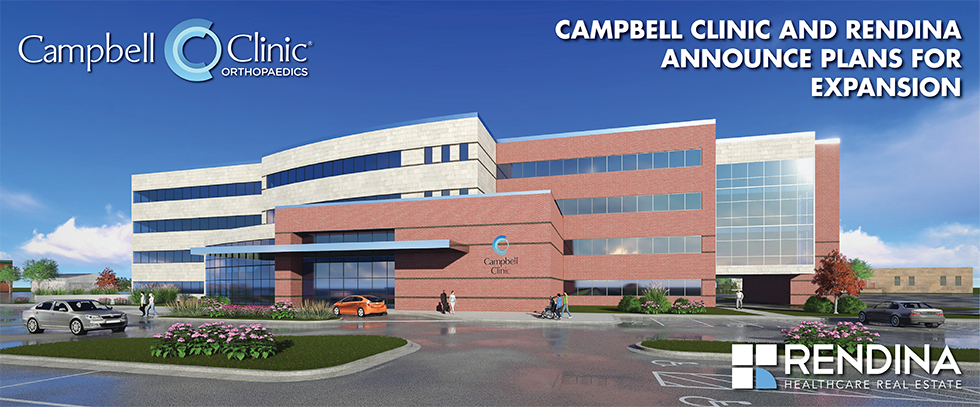
Preliminary plans call for the construction of a new four-story medical office building on a vacant 5-acre parcel immediately adjacent to the clinic’s current location at 1400 S. Germantown Road. The clinic purchased the property in 1992 and held it in reserve for future expansion.
The new facility is slated to include outpatient orthopaedic clinical space, expanded physical therapy and imaging suites and an ambulatory surgery center with eight operating rooms. An option to lease a portion of the new building to third-party tenants upon completion is also under development.
The facility will add approximately 120,000 square feet of new space to the Germantown campus at a cost expected to be near $30 million. The City of Germantown Planning Commission has approved the preliminary and final site plans.
In the coming months, Campbell Clinic will focus on finalizing building plans, completing the development team, seeking financing commitments, and gaining final requisite approvals from the City of Germantown and Shelby County in anticipation of commencing construction in mid-2018.
The clinic has partnered with Cushman & Wakefield | Commercial Advisors for the last several years in a strategic brokerage and advisory role for all clinic facilities as it has developed a comprehensive master plan for the future.
The clinic, which occupies 15 acres near the intersection of Wolf River Boulevard and Germantown Road in the city’s thriving medical corridor, currently comprises a 60,000 square foot clinic and a 12,000 square foot ambulatory surgery center. Campbell Clinic also operates four other clinics and an ambulatory surgery center in midtown Memphis.
“As the original anchor tenant of what has become a thriving Germantown medical district, Campbell Clinic has flourished in this office for a quarter-century,” says Campbell Clinic Chief of Staff Dr. Fred Azar. “In the early 1990s, our physicians blazed the trail to expand specialized medical services eastward in Shelby County. As the population has grown in our area, so has the need for quality orthopaedic care. This expansion will allow our organization to continue to grow to meet the demand while remaining a fixture in a very convenient location.”
The significance of the expansion paired with the aggressive timeline for completion makes the partnership with Rendina critical, according to Campbell Clinic CEO George Hernandez.
“Utilizing Rendina’s wealth of experience in healthcare real estate will enable us to create a world-class venue for our patients in a relatively short period of time while eliminating the risk of any service disruptions during the construction process,” says Mr. Hernandez. “The clinic has long been a regional destination for musculoskeletal care. This new facility will allow us to offer some new services while enhancing the patient experience for the services we already provide. We’re very excited to get started.”
Rendina has managed healthcare real estate solutions for nearly 30 years and has developed more than 7 million square feet of real estate during that time.
“We are proud to be partnering with one of the premier orthopaedic groups in the country on this exciting new project,” says Richard Rendina, Chairman and CEO of Rendina. “This expansion is vital for advancing orthopaedic care in the area and we are committed to delivering a facility that offers the convenience and high-quality healthcare Campbell Clinic is known for providing.”
About Campbell Clinic
Campbell Clinic’s mission is to provide unsurpassed patient care while being recognized as the leader in teaching and research in the profession of orthopaedic surgery. As one of the world’s premier practicing and teaching orthopaedic centers, Campbell Clinic is dedicated completely to the advancement of orthopaedic techniques in order to better serve its patients.
With four clinics located conveniently in the Mid-South, and After Hours urgent care clinics at its Germantown and Southaven locations, Campbell Clinic is committed to providing world-class care to patients throughout the region.
Campbell Clinic is also a leader in sports medicine, and have been recognized as Memphis’ top sports medicine clinic for multiple years in a row. Campbell Clinic serves as team physician and official sports medicine provider for the Mid-South’s top sports clubs and programs, including: Memphis Grizzlies (NBA); Memphis Redbirds (AAA affiliate of the St. Louis Cardinals of Major League Baseball); University of Memphis Athletics (NCAA); AutoZone Liberty Bowl (NCAA); FedEx St. Jude Classic (PGA TOUR); Rhodes College; Christian Brothers University; 13 area high schools; Multiple sports training facilities.
For more information about Campbell Clinic Orthopaedics, visit campbellclinic.com.