Rendina logo

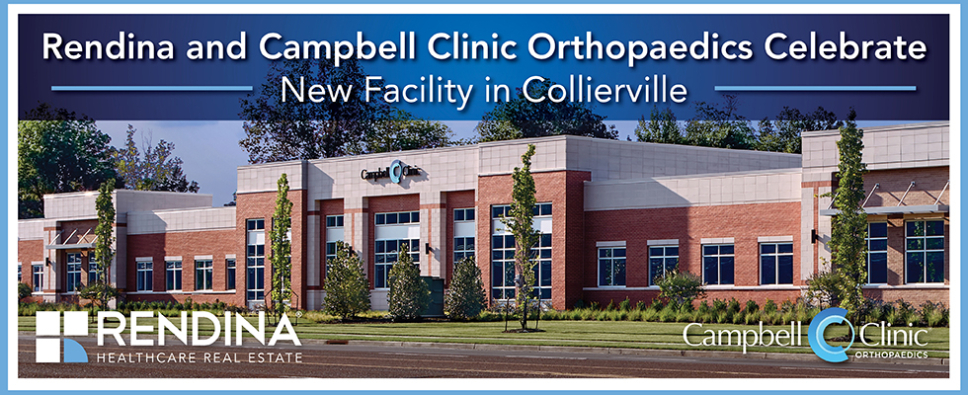
Rendina and Campbell Clinic Orthopaedics Celebrate Grand Opening of New Facility in Collierville (1900 W. Poplar Avenue, Collierville, TN)

Jupiter, FL | January 21, 2025

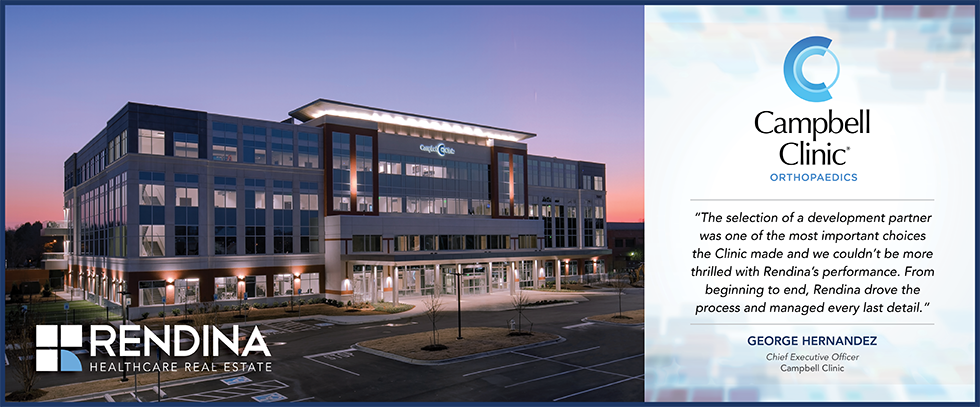
Rendina Healthcare Real Estate announced the completion of its second project with Campbell Clinic Orthopaedics, a new state-of-the-art orthopaedic facility located in Collierville, Tennessee. The 30,000 square foot clinic officially opened in early January and reflects the continued collaboration between the two organizations to expand access to high quality orthopaedic care in patient focused environments.

Located at 1900 West Poplar Avenue, the new facility features 16 exam rooms, expanded radiology services, and a 4,000 square foot physical therapy gym. An adjacent 4,300 square foot outdoor synthetic turf area supports sports rehabilitation and advanced recovery programs. The clinic was designed to meet the growing demand for orthopaedic services in the Collierville community while enhancing convenience and the overall patient experience.

“This project represents another successful milestone in our partnership with Campbell Clinic,” said Richard M. Rendina, Chief Executive Officer of Rendina Healthcare Real Estate. “We are proud to have delivered a facility that supports Campbell Clinic’s mission and provides the community with a modern, highly functional space for orthopaedic care. Collaborating with an organization that shares our commitment to quality and patient centered design continues to be incredibly rewarding.”

Rendina served as the developer of the project and led the real estate strategy, site planning, design coordination, and construction execution. Despite industry-wide supply chain challenges in 2023 and 2024, the project was completed on its planned 14-month schedule. Early procurement of critical materials and close coordination with the project team, including Linkous Construction and Davis Stokes Collaborative, were instrumental in maintaining momentum and achieving a timely delivery.

With nearly four decades of experience and more than nine million square feet of healthcare real estate delivered nationwide, Rendina continues to build long term partnerships with leading healthcare providers. The completion of the Collierville orthopaedic facility further demonstrates the firm’s ability to deliver high quality, patient focused environments that support clinical excellence and operational efficiency.

For more information about Campbell Clinic Orthopaedics, visit www.campbellclinic.com.
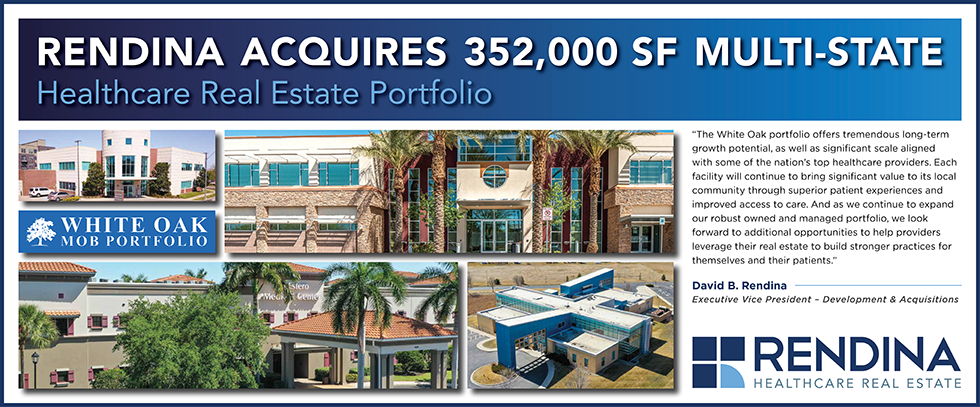
Rendina, Artemis land 12-MOB Portfolio

In recent months, getting transactions done in the medical office sector, or perhaps any real estate sector for that matter, has often been quite difficult.

With inflation in the high single digits and the federal funds rates rising steadily, as well as other uncertainties, the difficulty lies not only in buyers having difficulty finding affordable debt but in trying to find clarity in the prices for assets, which have been a moving target that has left many would-be investors waiting for some stability.

But deals are still getting done, as evidenced by a recent acquisition by the year-old programmatic joint venture (JV) partnership of Jupiter, Fla.-based Rendina Healthcare Real Estate, a long-standing healthcare real estate (HRE) development and management firm, and Chevy Chase, Md.-based Artemis Real Estate Partners, which was founded in 2009 and has invested about $9.5 billion in various sectors of real estate with about 100 operating partners. The partners made a rare, large purchase – at least rare and large compared to what has been taking place in the market in recent months.

The partnership acquired a 12-property, 352,981 square foot portfolio spanning eight states: Florida, Georgia, Illinois, Minnesota, Nevada, Ohio, Texas and Virginia.

The healthcare providers in the buildings offer a wide range of “high acuity services” and the portfolio is 96 percent occupied. The portfolio includes 10 medical office buildings (MOBs), plus two dialysis clinics occupied by Denver-based DaVita Inc. (NYSE: DVA) with a total of about 18,000 square feet accounting for the remainder of the space.


The portfolio includes 10 assets located in Certificate of Need (CON) states, a weighted average remaining lease term (WALT) of 6.6 years, and average annual rental rate increases of 2.2 percent. At net operating income per occupied square foot of about $21 NNN (triple net), average rents across the portfolio are about 10 percent below national portfolio averages traded during the past five years.

The Rendina-Artemis JV’s portfolio did indeed receive a strong boost with this most recent acquisition, as it now has invested about $300 million, including a recent $16 million acquisition of a 62,535 square foot MOB in Clifton, N.J., and the ongoing development of a 134,966 square foot outpatient campus and MOB for The Jackson Clinic and Baptist Memorial Health Care in Jackson, Tenn.

The JV was launched with a $116.5 million recapitalization of a six-MOB, 229,645 square foot, 99 percent occupied Rendina portfolio of assets. The partners say they plan to make investments, both acquisitions and developments, of about $1 billion in the coming years.

Rendina has a strong pipeline of development projects both under construction – it started about 350,000 square feet in 2021 that will be completed in coming months – and in planning. It also started construction earlier this year, in partnership with White Plains, N.Y.-based Rethink Healthcare (formerly Seavest Healthcare Properties), on three freestanding emergency departments (FSEDs) and urgent care centers in the Jacksonville, Fla., market for UF Health.

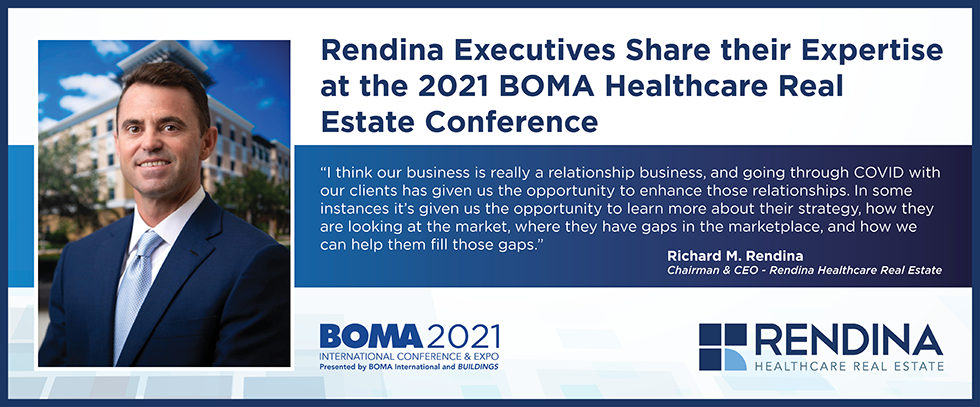
Rendina Executives Share their Expertise at the 2021 BOMA Healthcare Real Estate Conference

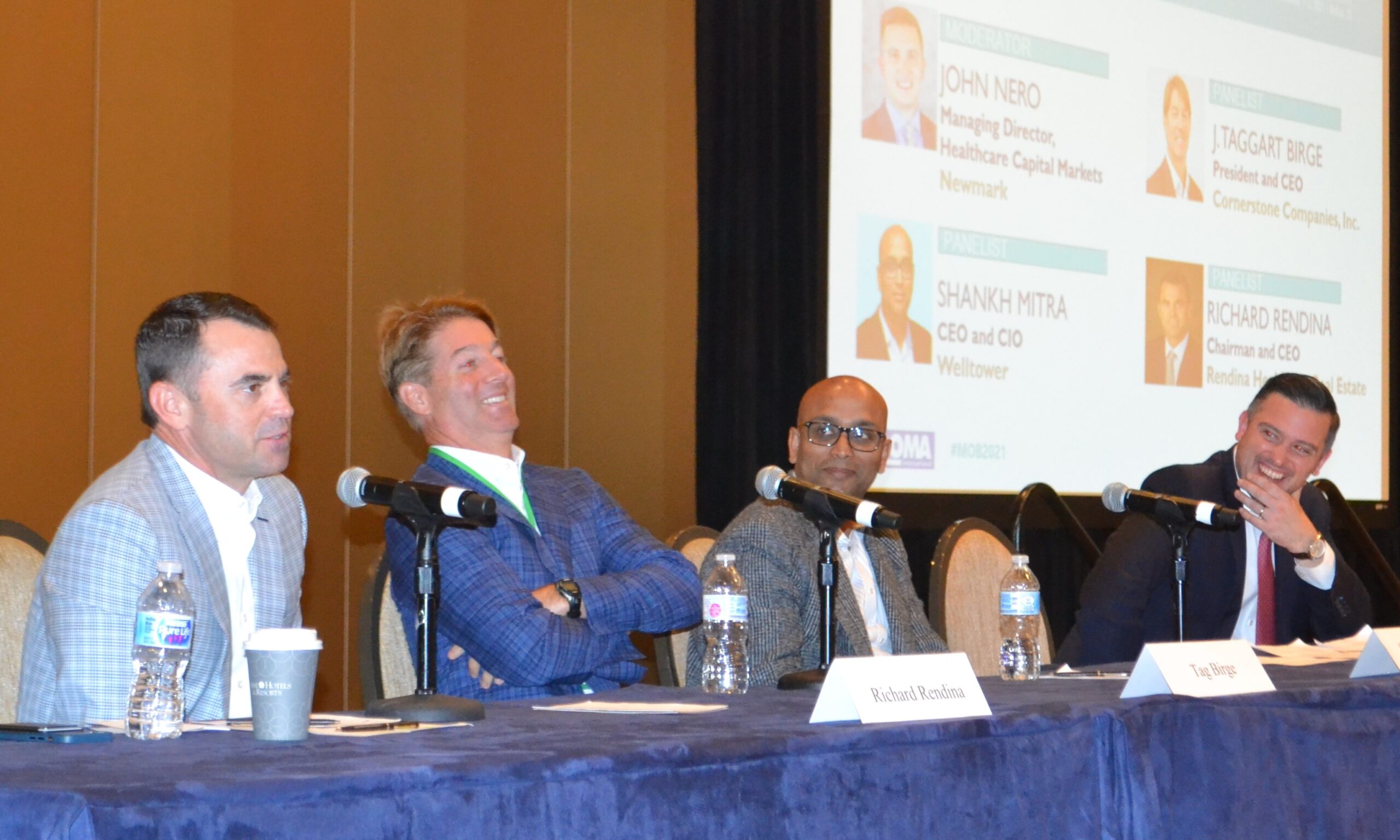
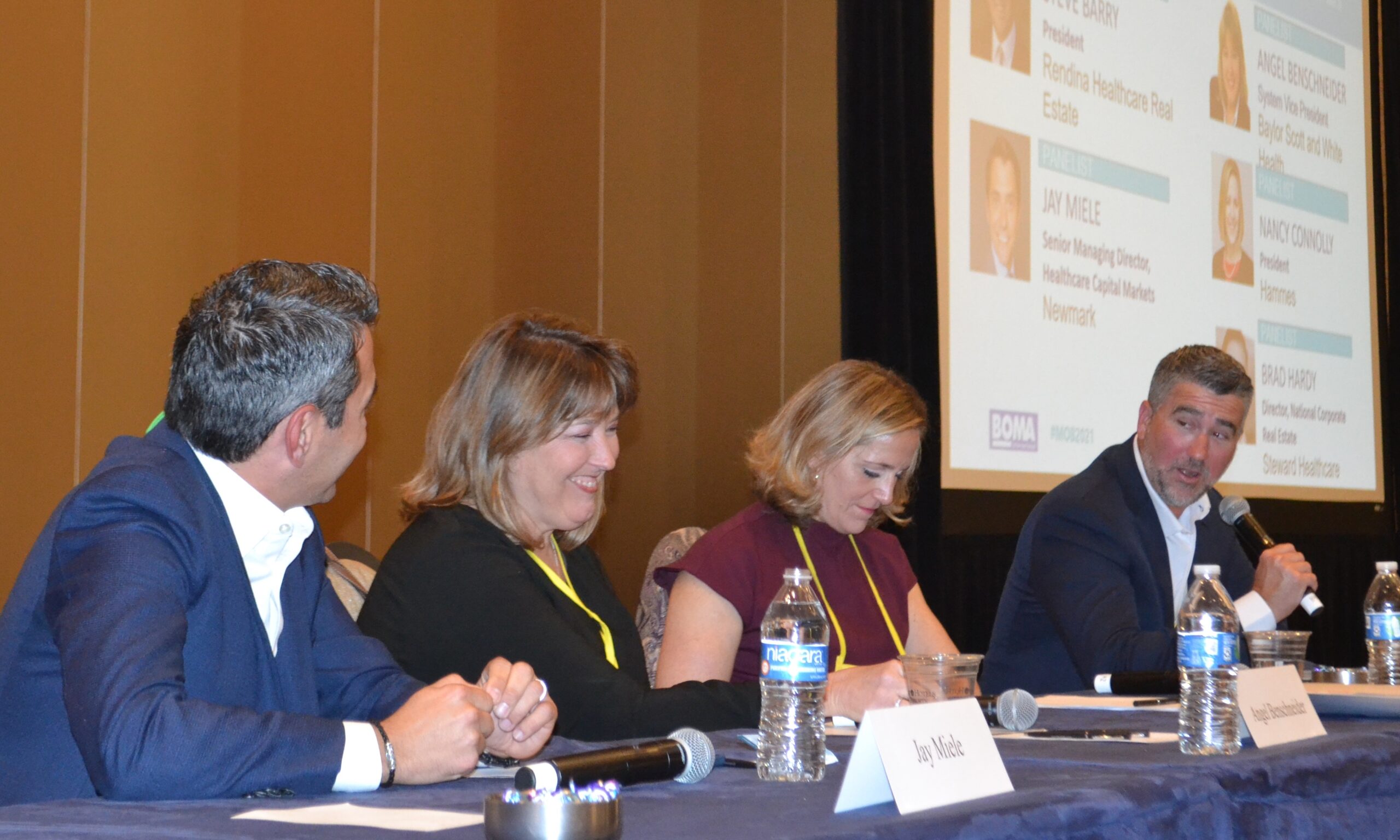
Richard Rendina, Chairman & CEO of Jupiter-based Rendina Healthcare Real Estate, and Steve Barry, President of Rendina, shared their expertise on two educational panels at the 2021 BOMA International’s Medical Office Buildings (MOBs) + Healthcare Real Estate (HRE) Conference Nov. 1-3 in Dallas at the Omni Dallas Hotel.

The importance of relationships and the impact of inflation

“The CEO Perspective” panel discussed a wide range of topics, including the state of the industry, capital market trends, and opportunities and challenges in the dynamic HRE space. The panelists also discussed how the COVID-19 pandemic has impacted the industry.

“I think our business is really a relationship business, and going through COVID with our clients has given us the opportunity to enhance those relationships. In some instances it’s given us the opportunity to learn more about their strategy, how they are looking at the market, where they have gaps in the marketplace, and how we can help them fill those gaps.”

He continued, “I would say it really started with the Affordable Care Act when hospitals were looking to invert their revenue stream to be 60 percent outpatient instead of 60 percent inpatient. Now with COVID, I think they’ve all taken a step back and really want to evaluate their outpatient holdings – where they have offices, where they have ownership. Any opportunities we have to help hospitals and health systems with this is great for us.”

The panel also discussed inflation.


The effects of telehealth, COVID and rising development costs

The “Development Trends” panel discussed how the continuous evolution in the HRE industry has been accentuated because of COVID-19 and how health systems and developers are adapting to those changes. One important topic was the increase in telehealth.


The panelists also discussed rising costs in the HRE sector.

Mr. Barry said, “We’re seeing increased technology capabilities in buildings, including remote monitoring and virtual technologies. We’re looking at the requirement for more flexible spaces or multi-purpose spaces to be able to accommodate uncertainty in the future. When we list all those things off, I don’t think that’s a less expensive building. I think those are more expensive buildings as opposed to the more straightforward MOB or outpatient facility of the past. So the next question is how we in this current construction environment can deliver these facilities cost efficiently.”

Campbell Clinic and Rendina Celebrate Grand Opening of 120,000 SF MOB

Germantown, Tennessee

Campbell Clinic is continuing its commitment to provide Germantown residents with world-class healthcare at the Clinic’s new Orthopedic Surgery Center, which is celebrating its grand opening.

The new, four-story, 120,000 square foot facility will assist Campbell Clinic in implementing an ambitious growth strategy and alleviate pressure on its existing Germantown surgery center that was operating at capacity. The center, developed by Rendina Healthcare Real Estate, will bring nearly 200 jobs to Germantown over the coming years.

The new state-of-the-art property includes an ambulatory surgery center with eight operating rooms, an outpatient orthopedic clinical space, and a cutting-edge physical therapy and sports performance area, known as the S. Terry Canale Family Performance and Wellness Center. This 11,000-square-foot wing of the new building was named after retired orthopaedic surgeon and former Chief of Staff, Terry Canale, MD. The sports medicine and physical therapy programs will provide service not only to residents, but also to athletes from the Memphis Redbirds, the Memphis Grizzlies, Memphis 901 FC and various universities and high schools.


Adjacent to the new surgery center is the Clinic’s recently renovated 60,000-square-foot medical office building, creating a fully modernized campus providing unmatched orthopaedic care. Rendina utilized its full-services development capabilities by managing all aspects of the design and approval process and oversaw construction of the new facility.


Rendina provided their full-services development capabilities by managing all aspects of the design and approval process and will also oversee construction of the new facility.


About Campbell Clinic

Campbell Clinic is recognized as a world leader in sports medicine, pediatric orthopaedics, joint replacement, orthopaedic oncology, physical medicine and rehabilitation, and surgery of the hand, hip, foot, knee, shoulder and spine. Their team of specialists is dedicated to the mission of providing unsurpassed patient care while continuing the clinic’s role as the leader in teaching and research in orthopaedic surgery.

Campbell Clinic’s medical staff continues its founder’s legacy as the organization continues to write, edit and publish the world’s preeminent text on orthopaedic surgery. The clinic treats more than 175,000 patients annually and pioneered locally the concept of urgent orthopaedic walk-in care. With more than 500 employees, 51 physicians, and a reach that touches patients in the Mid-South and around the world, the clinic casts its vision into the future through comprehensive training, ground-breaking research and innovation.

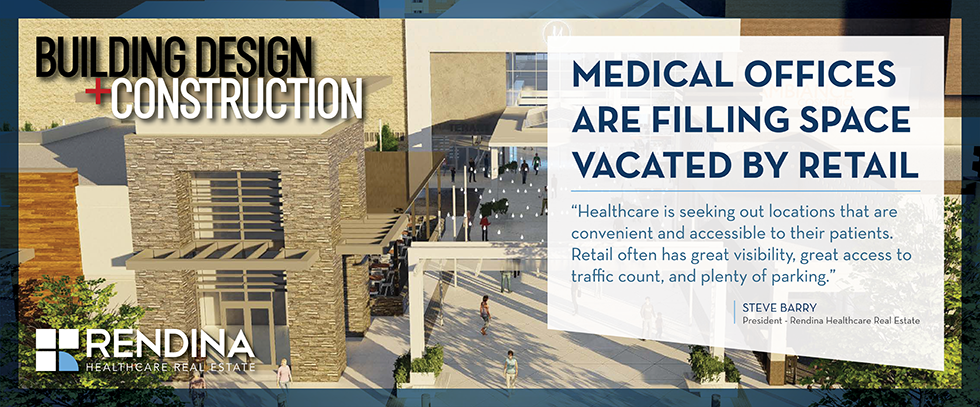
Medical Offices are Filling Space Vacated by Retail

Healthcare developers and providers like the locations, traffic, and parking these spaces offer.

Within the $400 billion global market for healthcare construction, two-fifths of all new retail transactions are for medical offices, compared to 2% a decade ago, according to recent AIA estimates.

As more developers, landowners, and retail strip owners look for ways to bring a medical facility to their properties, “nontraditional retail spaces for healthcare services are expected to continue to rise in popularity,” predicts JLL in its 2019 research report “Retail and the New Healthcare Consumer.”

CLICK HERE FOR THE FULL ARTICLE


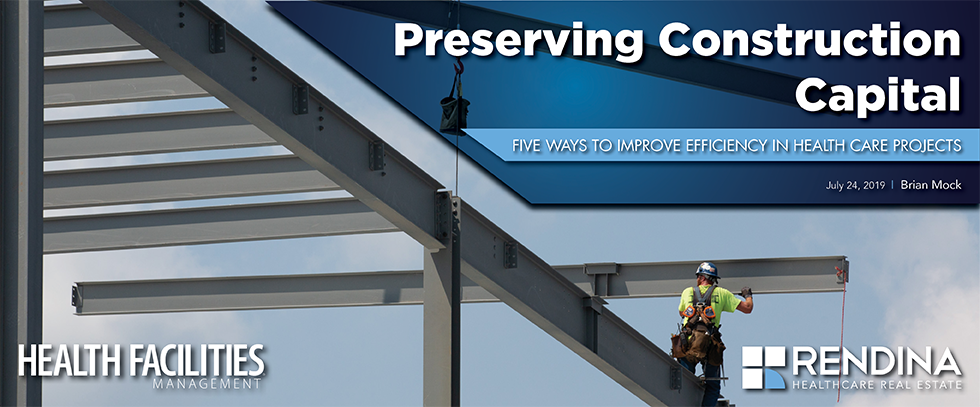
Preserving Construction Capital: Five ways to improve efficiency in health care projects

Brian Mock, Executive Vice President of Construction and Development at Rendina Healthcare Real Estate was recently published in Health Facilities Magazine. Check out excerpts of the article below and follow this link to read the full article.


Hospitals and health systems must evolve their bricks-and-mortar investments to adapt to patient preferences as more care moves out of the hospital and toward outpatient facilities.

That evolution often involves expensive greenfield construction or extensive retrofitting of existing space, which poses its own unique challenges. Cost is a chief concern, but minimum design specifications that govern building size and scale are also extremely important and can limit flexibility.

Yet with careful planning and execution, budgetary limitations can be met successfully.

Five Rules

Don’t let common mistakes trip you up. When making the important decisions that are critical to a project’s success, adhere to the following five rules to preserve capital during health care facility development.

1. Choose the right design partner.

Having the right team assembled on the front end will reduce or avoid hidden costs and likely eliminate the need to redesign after construction has begun, which is sometimes necessary, but is expensive and can lead to delays.

2. Set an aggressive schedule.

It is critical to map out completion dates on specific components of the project, noting where components depend on progress made in other areas. Then the development team must work diligently to meet those milestones, because delayed completion of one step inevitably trickles down through the schedule to impact many others.

3. Regionalize the design.

Building projects in the Northeast is completely different from building them in South Florida. It’s important to have regional experience to navigate the different construction design standards that are native to a project’s location.

4. Challenge overdesigns.

Health care leaders must be careful not to overdesign significant parts of their facilities and make sure they are designing each functional space for a specific use.

5. Use design-side technology.

Building virtually before beginning actual construction can identify potential stumbling blocks and conflicts uncovering incompatible pieces of the puzzle well before construction equipment and workers begin their tasks.

Good stewardship

Hospitals and health systems are increasingly measured on efficiency and safety in a multitude of arenas, and their construction projects should be no different. Minimizing mistakes is critical to good stewardship of precious capital and following these five rules will ensure a much more efficient deployment of capital than would otherwise be possible.

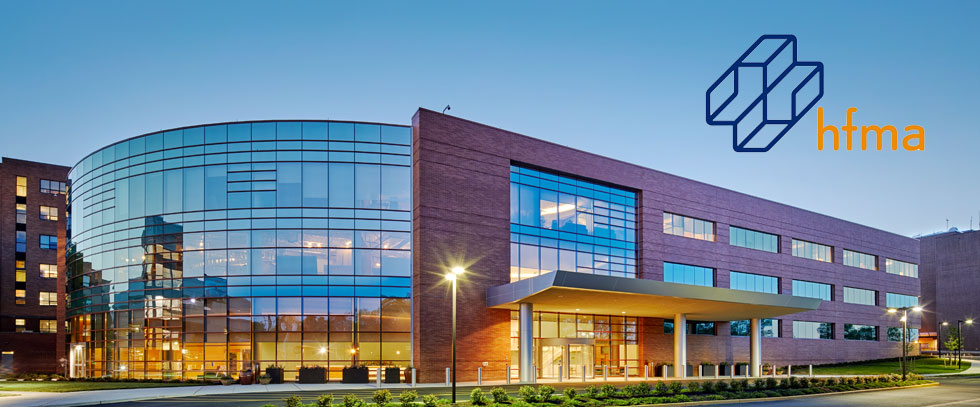
Rendina Project Featured in hfm Magazine

Thomas Biga, president of RWJBarnabas Health’s hospital division, recently authored an article for hfm magazine about using real estate monetization to finance facility upgrades. The article explores RWJBarnabas Health’s partnership with Rendina Healthcare Real Estate on the Clara Maass Medical Center campus in Belleville, N.J. By selling existing Clara Maass campus medical office buildings to Rendina, RWJBarnabas Health was able to help finance the construction of a new hospital lobby, medical office space and intensive care unit for Clara Maass.

CLICK HERE FOR THE FULL ARTICLE

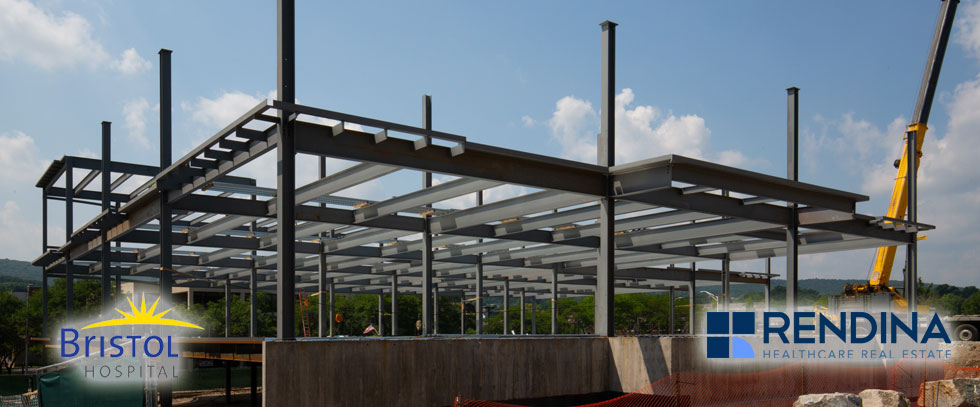
Recent News Coverage on The Bristol Hospital Ambulatory Care Center project


Located at the intersection of Main Street and Riverside Avenue in downtown Bristol, the ACC will be occupied by Bristol Hospital’s Multi-Specialty Group, providing the community with a range of crucial services including endocrinology, rheumatology, urology, cardiology, and a diabetic center.

In addition to providing affordable and accessible healthcare to the community, the project takes an important step in the renaissance of downtown Bristol, and will give forth to future development as the ACC attracts residents and generates renewed interest in selecting the area as the site for new retail and residential projects. Working with the Hospital and the City of Bristol to fully understand their vision, Rendina collaborated on a design that blends medical and retail architectural elements, represented by the glass and brick façade and use of natural light throughout – creating an inviting atmosphere that will include a café in the two-story atrium. The ACC is expected to open in late 2019.

News Coverage

The Bristol Press: “‘We’re not stopping,’ Bristol Hospital’s Barwis says”

Hartford Courant: “Bristol Hospital: Outpatient Center Downtown Should Open In Spring”

Hartford Courant: “Hospital Foresees Spring Opening”

The Bristol Press: “Vital Signs Strong”

Live Feed of Construction

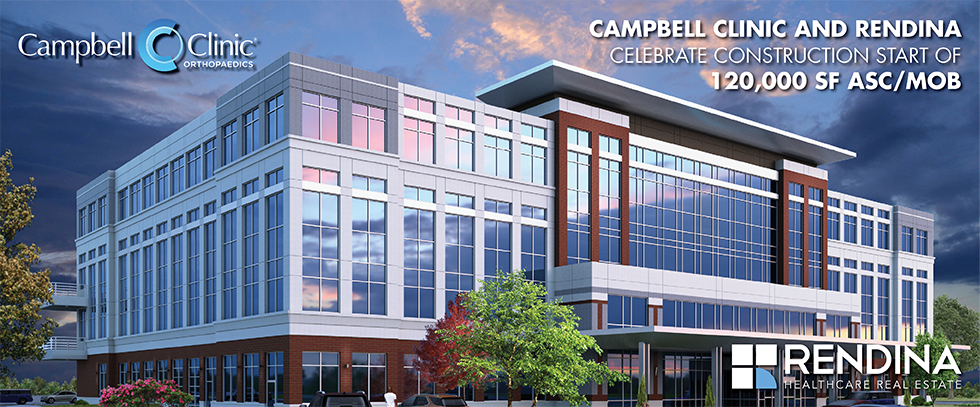
Campbell Clinic and Rendina Celebrate Construction Start of 120,000 SF MOB in Germantown, Tenn.

Germantown, Tennessee

Staff members of Campbell Clinic, city officials, and representatives from Rendina Healthcare Real Estate gathered to celebrate the groundbreaking of Campbell Clinic’s new 120,000-square-foot medical facility on Thursday, May 24.

The ceremony was held at the future location of the four-story complex on Wolf River Boulevard., adjacent to Campbell Clinic’s existing orthopaedics building. The new facility will assist Campbell Clinic in implementing an ambitious growth strategy over the coming months and years, and alleviate pressure on their existing Germantown surgery center that is currently operating at capacity.


The new facility will include an ambulatory surgery center with eight operating rooms, an outpatient orthopedic clinical space, and an expanded physical therapy and sports performance area. In addition to the new facility, Campbell Clinic will renovate its existing 60,000 square foot building adjacent to the new facility – creating a fully modernized campus providing full-service orthopedic care with enough capacity for years to come.


The new space will help the Clinic’s implement their plan to hire more than 50 new physicians, five physician assistants and two nurse practitioners – resulting in decreased wait times for patients and more accessible care for the community.


Rendina provided their full-services development capabilities by managing all aspects of the design and approval process and will also oversee construction of the new facility.

About Campbell Clinic

Campbell Clinic is recognized as a world leader in sports medicine, pediatric orthopaedics, joint replacement, orthopaedic oncology, physical medicine and rehabilitation, and surgery of the hand, hip, foot, knee, shoulder and spine. Their team of specialists is dedicated to the mission of providing unsurpassed patient care while continuing the clinic’s role as the leader in teaching and research in orthopaedic surgery.

Campbell Clinic’s medical staff continues its founder’s legacy as the organization continues to write, edit and publish the world’s preeminent text on orthopaedic surgery. The clinic treats more than 175,000 patients annually and pioneered locally the concept of urgent orthopaedic walk-in care. With more than 500 employees, 51 physicians, and a reach that touches patients in the Mid-South and around the world, the clinic casts its vision into the future through comprehensive training, ground-breaking research and innovation.

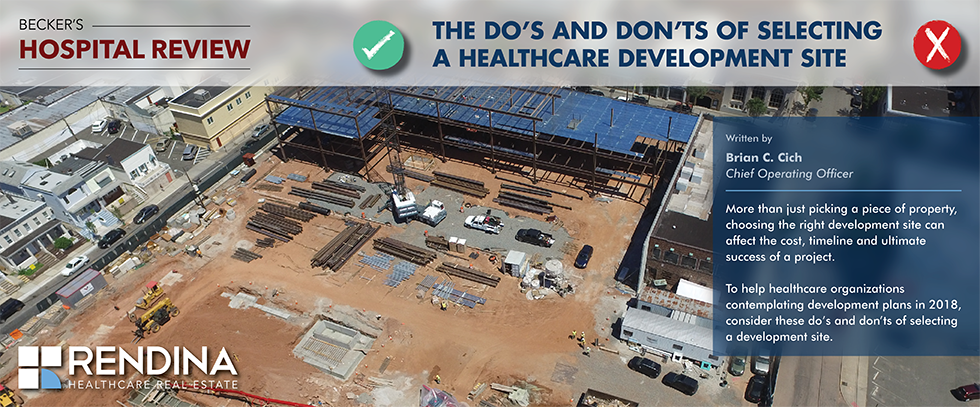
The Do’s and Don’ts of Selecting a Healthcare Development Site

Brian Cich, COO of Rendina, recently authored an article on helping healthcare organizations that are contemplating development plans in 2018. The article, “The do’s and don’ts of selecting a healthcare development site,” was published on January 11, 2018 on Becker’s Hospital Review’s website. The article can be read in full from the link below.

Click Here for the Full Article


DO: DETERMINE PRIORITIES

Many healthcare organizations engage a development partner at the early stages of a project to help them set criteria and evaluate properties with those considerations in mind. Most commonly, healthcare organizations set priorities related to location, lot size, cost and speed to market.

DO: CAREFULLY CONSIDER LOCATION

Often, the desire or need for a physical presence within a specific geography will drive a healthcare development forward. However, geographic constraints are rarely the only consideration when it comes to facility location. Among other important factors are: Visibility to potential patients, proximity to other healthcare access points,and convenience.

DON’T: SKIMP ON LOT SIZE

Ideally, you want a piece of property that can accommodate your development with little or no excess acreage. Unless there are plans for expansion, you should be careful not to over-purchase – thereby using capital that could be deployed elsewhere. However, under-purchasing creates a bigger challenge. When a site is too small, it may force you to adapt your development plan, sometimes to the extent of reducing programs or services if you are unable to make everything fit. Worse, you may have to start over and consider other sites, adding time and cost to the development process.

DO: CONSIDER BUDGET UP FRONT

Location, lot size, convenience and other site characteristics will all affect the price of a piece of property. It’s important to know up-front how much capital can be allotted for property so as to keep the overall project on budget.

Consider, too, that in most cases the overall difference between purchasing and ground leasing a property is minimal when you factor in the long-term lease expense. On the other hand, there can be a major cost difference between building from the ground up and retrofitting an existing building.

DON’T: UNDERESTIMATE REGULATORY HURDLES

Every property is unique. Some parcels of land may have issues that must be resolved before development can begin – such as zoning code changes, variances, or environmental remediation. Resolving such regulatory hurdles can be time consuming and may be enough to rule out a property if you want or need to move quickly toward project completion. Be sure to understand any potential regulatory hurdles before settling on a property so you can avoid any unnecessary delays or surprises.

Site selection and property development are complex issues with many factors to consider. Keeping these do’s and don’ts in mind can you begin an effective site search process.

© Copyright ASC COMMUNICATIONS 2018.