Rendina logo

Heroes in Medicine to be Honored at Awards Luncheon

Palm Beach County Medical Society Services recently announced its finalists for the 2011 Heroes in Medicine Awards. Finalists will be recognized at the “Eighth Annual Heroes in Medicine Awards Luncheon,” to be held on May 11 at 11 a.m. at the Kravis Center in West Palm Beach.

Award recipients in various categories will be announced at the luncheon, which is made
possible by the grand benefactor, Rendina.

“This year’s finalists are an incredible group of people who have done so much for this community and beyond,” said chairwoman Sally D. Chester. “They are all truly heroes.”

The 2011 Heroes in Medicine categories and finalists are as follows:

[fancy_box]
[fancy_list style=”arrow_list”]

    Lifetime Achievement Award
  • Charles Moore

  • Posthumous Award
  • Richard Bruno

  • Community Outreach Heroes
  • American Association of Caregiving Youth
  • Barbara O’Donnell
  • Karen Perry
  • Edward Mostel and R. Scott McFarland

  • Bruce Rendina Professional Heroes
  • Robert Broadway
  • Richard Busto
  • Jonathan Satter

  • Healthcare Provider Heroes
  • Susan Korman
  • Ljubica “Jibby” Miskovic
  • Ila Swick
  • Flor Utria

  • Physician Heroes (Local)
  • Robert Borrego
  • Gail A. Cooney
  • Malcolm Dorman
  • Daniel Lichtstein
  • Louise Morrell

  • Physician Heroes (International)
  • Chauncey W. Crandall IV
  • Daniel B. Kairys
  • Mitchell A. Schuster
  • John Strasswimmer

  • Student Heroes
  • Geoffrey Campbell
  • Carson Dowd
  • Palm Beach Atlantic University Student Nurses: Stephanie Carter, Johanne Alexandre, Michelle Flammia, Thuy Nguyen, Kim Sansone, and Fernanda Serrano

[/fancy_list]
[/fancy_box]

Proceeds from the “Heroes in Medicine” will benefit Project Access, a community-based program to increase access to healthcare for the uninsured. The event is sponsored by the presenting enefactor, Rendina; grand benefactor, JFK Medical Center Medical Staff; benefactor, JFK Medical Center, and South Florida Hospital News. Tickets for the luncheon are $90.

For more information, call the Palm Beach County Medical Society at 561-433-3940.


Fontana, Gina. “Heroes in Medicine to be honored at awards luncheon” Sun Sentinel. 27 April 2011. Electronic.

Industry Veteran Melayne Yocum Joins Rendina’s Advisory Board

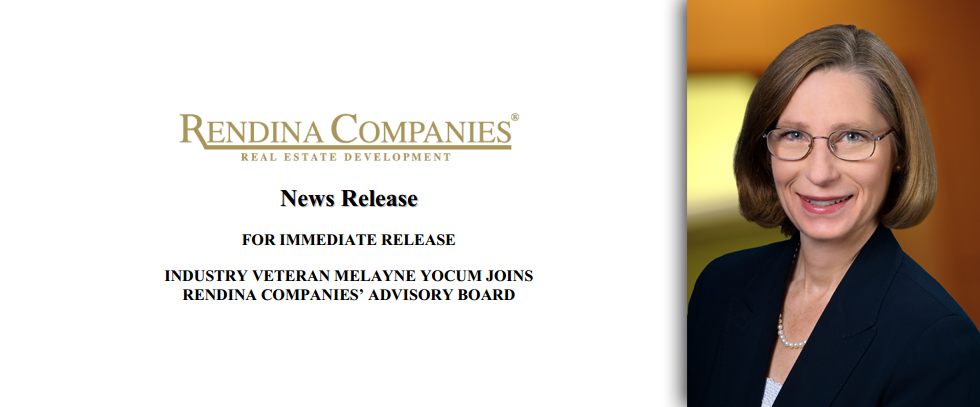
Rendina announces the appointment of Melayne Yocum to the company’s Advisory Board. Ms. Yocum brings over 25 years of healthcare experience, including over 10 years on the senior leadership team of HealthCare Partners, LLC – one of the largest physician organizations in the country.

“We are very fortunate to have another seasoned healthcare professional join the ranks of the Rendina Advisory Board,” stated Richard Rendina, Chairman and Chief Executive Officer of Rendina. “Ms. Yocum’s tremendous knowledge in healthcare reform and physician organizations will provide great insight to the Rendina team as we continue to grow and adapt our business model to the ever changing healthcare environment.”

Ms. Yocum began her career at Price Waterhouse in the National Health Care office with a scope that included audits and consulting engagements for hospitals across the country. Since that time, she has gained vast experience with the successful implementation of patient-centered Medical Homes and Electronic Health Records and has served in interim management roles in hospitals, IPAs, MSOs, and medical groups as a CEO, CFO, or COO. She is an expert at strategic planning, financial and operational improvement, process redesign, and cultural change for physician organizations and Accountable Care Organizations (ACO).

Ms. Yocum holds a Bachelor of Science in Accounting from Truman State University and is a licensed CPA in California

Industry Veteran Bill Leyhe Joins Rendina’s Advisory Board

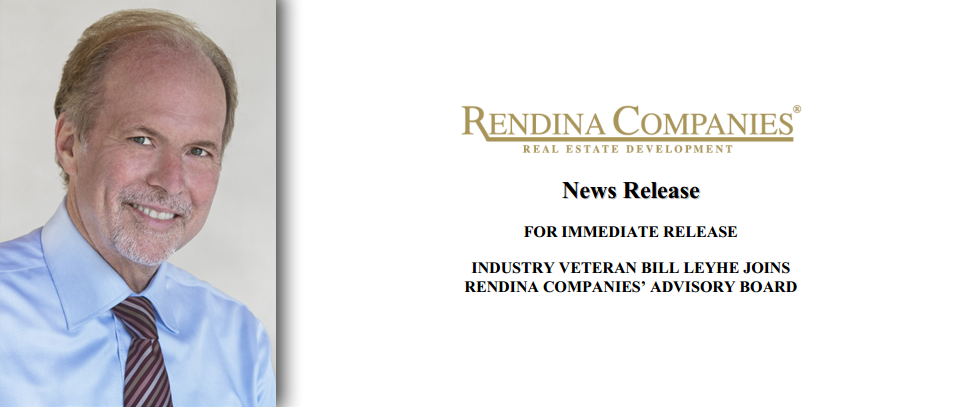
Rendina announces the appointment of Bill Leyhe to the company’s advisory board. Leyhe brings more than 25 years of executive level experience to Rendina. In his capacity as an advisory board member, Leyhe will serve as a senior advisor to Rendina’s leadership.

“We are proud to welcome Bill to our advisory board,” stated Richard Rendina, Chairman and Chief Executive Officer of Rendina. “Bill has had tremendous success in the healthcare industry and his experience and knowledge will play an integral role in the continued growth of our organization.”

Bill Leyhe’s career in the healthcare industry spans decades, most recently is a Principal with Bridge Executive CorporationTM, responsible for developing and managing interim executive teams and operations/strategy management advisory engagements in the health services sector. Prior to Bridge Executive CorporationTM, Mr. Leyhe was founder of The Peira Group and served as Managing Director. The Peira Group is a highly regarded advisory service to the hospital and managed care industry. Previous to his time at The Peira Group, Mr. Leyhe served as Vice President, Managed Care and Strategic Planning with Tenet Healthcare and was Regional Vice President of Hospital Operations.

As an industry leader, Leyhe is Chairman of Integrated Systems Council; Vice Chairman of Healthcare Association of Southern California and is a Board Member of the California Hospital Association. Leyhe is a graduate of Cornell University and New York Institute of Technology


[button link=”https://rendina.com/wp-content/uploads/2014/05/Bill-Leyhe-Press-Release-2.24.11.pdf” size=”large” variation=”deepblue” align=”center” target=”blank”]Click Here for the Full Press Release[/button]

Rendina Breaks Ground on the Mainland Medical Arts Pavilion

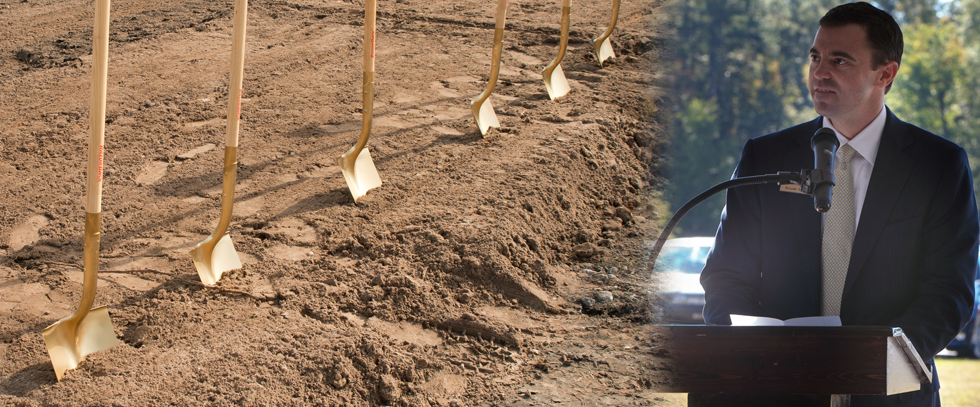
Rendina, a leading healthcare real estate developer, broke ground this week on the construction of a 35,000 square-foot medical office building in Texas City. The new state-of-the-art medical facility will be conveniently located adjacent to the campus of Mainland Medical Center, just off of the Emmett F. Lowry Expressway. The area’s leading multi-specialty group, the Beeler-Manske Clinic, will occupy the entire second floor of the two-story facility, which is anticipated to be completed in the third quarter of 2011.

“Rendina is pleased to provide the physicians of Galveston County an opportunity to practice in custom-designed medical office suites within walking distance of the hospital.” said Steve Barry, Vice President of Business Development for Rendina. “Not only will the Mainland Medical Arts Pavilion benefit the physician practices involved, but more importantly, it will improve the quality of care in the community.”

The new facility will host an impressive mix of the area’s leading physicians. Beeler-Manske Clinic has a long tradition of providing quality care in the region dating back to 1936. With nine physician providers, the Beeler-Manske Clinic focuses on family practice, internal medicine and cardiology as well as providing lab and imaging services. In addition to the Clinic, the facility will house prominent specialists including The Eye Clinic of Texas, Texas Ear, Nose & Throat Specialists, Interventional Pain Specialists of Texas and Gateway Chiropractic. The new facility also has plans for a compounding pharmacy, creating additional convenience for patients and visitors.

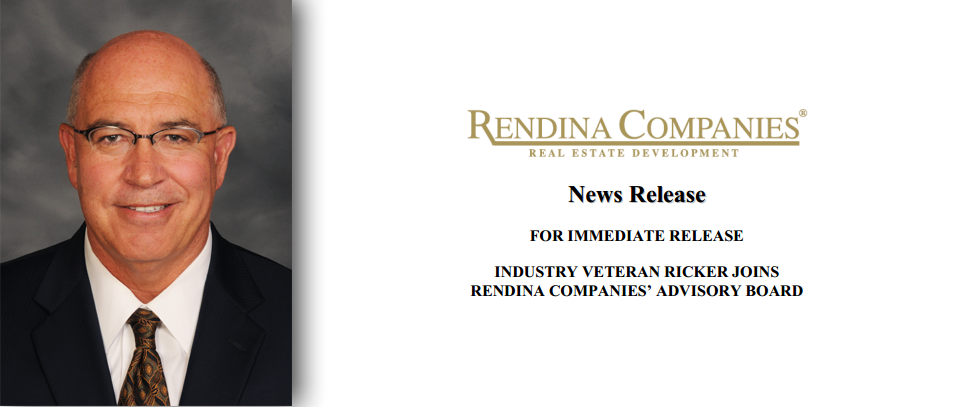
Industry Veteran David Ricker Joins Rendina’s Advisory Board

Rendina announces the appointment of David Ricker to the company’s advisory board. Ricker brings more than 25 years of executive level experience to Rendina. In his capacity as an advisory board member, Ricker will serve as a senior advisor to Rendina’ leadership.

“We are very pleased and fortunate to have David join our advisory board,” said Richard Rendina, chairman and chief executive officer of Rendina. “David’s experience, energy and natural business acumen will help guide us in our efforts to maximize our value to our clients.”

David Ricker’s career in the healthcare industry spans nearly three decades, having most recently served as The Broadlane Group’s president and chief executive officer from August 2008 to January 2010. He is one of The Broadlane Group’s founders and became the company’s first employee and chief operating officer in March of 2000. The position of president was added to his title in 2005.
Under Ricker’s leadership, The Broadlane Group firmly claimed its spot among the nation’s six largest group purchasing organizations, receiving the Inc. 500 Fastest Growing Companies award in both 2004 and 2005.

As an industry leader, Ricker is widely recognized for conceiving innovative services that changed the GPO landscape. He was elected chairman of the Federation of the American Hospital Exhibitor Committee, and is a frequently sought speaker at industry events. He was elected to The Broadlane Group’s board of directors in August of 2008, and to date serves on the company’s board as an outside director.

Prior to his time at The Broadlane Group, Ricker operated as senior vice president of material resource management at Tenet Healthcare and chief executive officer of BuyPower – Tenet’s previous group purchasing organization. Preceding Tenet, Ricker served as North American division vice president at IVAC, a manufacturer of drug delivery and vital signs technology systems. Prior to IVAC, he spent nine years as vice president of materials management services at Premier Health Alliance.

Ricker earned his bachelor’s degree in communications from Rowan College in New Jersey.

Loker Medical Arts Pavilion Has Completed Construction

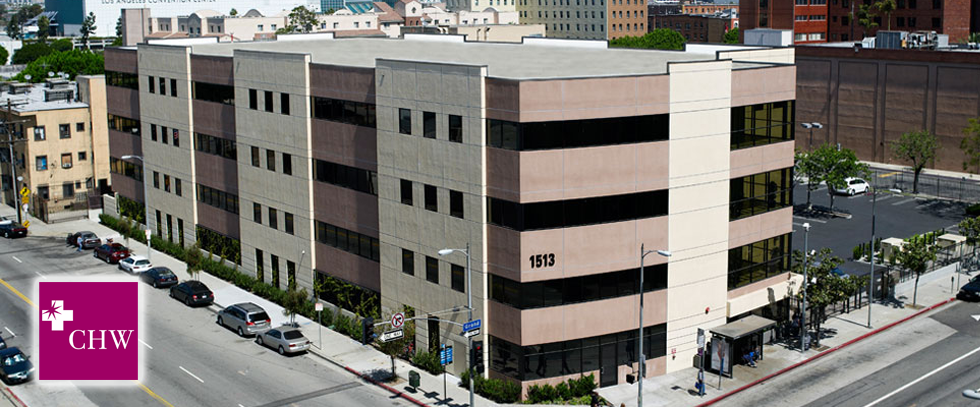
Rendina, in conjunction with California Hospital Medical Center, announces the completion of the three-story, 65,000 square foot Loker Medical Arts Pavilion. The new building is located in Los Angeles, California on the campus of the California Hospital Medical Center, a Catholic Healthcare West Hospital.

“We are very pleased with the new facility,” said Jerry Clute, President of California Hospital Medical Center. “It allows us to better serve our current physician base while attracting new physicians to the area; both of which provide a tremendous benefit to the community.”

The Loker Medical Arts Pavilion is located directly on California Hospital Medical Center’s campus and prominently displayed on the corner of Venice Boulevard and Grand Avenue. The new medical office building houses medical office space for staff and physician practices.

Rendina was responsible for all development activities, including construction management, leasing, and tenant improvement coordination. Rudolph & Sletten served as the contractor, based on their reputation of providing quality healthcare facilities.

“This new facility creates a state-of-the-art work environment for the physicians,” said Mark S. Hellickson, President – Western Region of Rendina. “We are proud to support California Hospital Medical Center in their commitment to deliver highquality, affordable healthcare services to the Los Angeles community.”

About Catholic Healthcare West (CHW):

Catholic Healthcare West (CHW), headquartered in San Francisco, CA, is a system of 40 hospitals and medical centers in California, Arizona, and Nevada. Founded in 1986, it is the eighth largest hospital system in the nation and the largest not-for-profit provider in California. CHW is committed to delivering compassionate, high-quality, affordable health care services with special attention to the poor and underserved. The CHW network of more than 10,000 physicians and approximately 60,000 employees provides health care services to more than four million people annually. In 2009, CHW provided $1.2 billion in charity care and unsponsored community benefit. For more information, please visit their website at www.CHWhealth.org.

The Leader in Medical Real Estate

[pullquote1 quotes=”true” align=”right” textColor=”#012841″ cite=”Todd Varney, Executive Vice President, Rendina”]We have a vehicle in which doctors can have entrepreneurial opportunities and additional flexibility. We provide alternatives for physicians other than being renters or owning an entire building outright.[/pullquote1]
When Bruce Rendina created the business model for his development company, others in the industry thought he was making a risky move. “When my father had the idea that he would allow the doctors who were going to have offices in his building to actually own a piece of the building, other developers thought he was crazy,” says Richard Rendina, Chairman and Chief Executive Officer of Rendina.

“They couldn’t imagine that anyone would develop a building and want to give away a stake in it. But my father always said he’d rather hit singles than home runs. If the doctors are happy with their new partnership, they are the best advertisement for our company.” Rendina’s idea proved to be exactly the right concept at the right time, and this “equity participation program” for medical professionals is now Rendina’s signature product. “We have a vehicle in which doctors can have entrepreneurial opportunities and additional flexibility,” says Todd Varney, Executive Vice President. “We provide alternatives for physicians other than being renters or owning an entire building outright.”

A Family Legacy

[pullquote1 quotes=”true” align=”left” textColor=”#012841″ cite=”Robert Broadway, Vice President, Bethesda Healthcare System”]Rendina has many years of expertise in the healthcare real estate market. They help meet the challenges facing hospitals by providing quality medical office buildings on or near their campuses, while utilizing an effective ownership model that supports their medical staff’s office needs.[/pullquote1]
Rendina got its start 20 years ago. Bruce was friendly with many doctors and knew that they were always looking for better office space. Being located close to, or on hospital grounds, was important for the growth of their practices. A certified public accountant by training, Bruce created a financial structure that would allow the doctors to hold ownership with a partner who
understood development and was willing to assume the risk. The St. Mary’s Medical Pavilion was his first project, and within his first year in business he had several other projects in the pipeline. The Company continues to be a leading healthcare developer today, although it does develop other residential, commercial and mixed use projects as well.

“Bruce wasn’t the typical financial professional,” says Lawrence Juran, Co-Vice Chairman. “He had the analytical skills of an accountant, with the personality of an entrepreneur”. Juran joined Bruce in a predecessor company as in-house counsel in what he calls now “a once in a lifetime opportunity to connect with a person and a company like this.” Within the company’s first year, Rendina completed four projects and went on to great success with the new model, opening an office in La Jolla, California in addition to the headquarters now located in Jupiter, Florida.

Juran’s tenure with the company is typical. The average employee has been with the firm more than seven years, and the average executive tenure is more than 11 years, says Executive Vice President Todd Varney, who has been with the company for 15 years. David Strachan, Co-Vice Chairman, has been with the company for 16 years, and the President of the Western Region, Mark Hellickson, has been with the company for 15 years. “This is a company with a family culture,” says Varney. “This is the kind of place where people choose to spend their whole career.”

In 2006, the company faced an emotional transition when its founder, Bruce Rendina, passed away. His son Richard Rendina assumed the Chairman and Chief Executive Officer role while son Michael became Executive Vice President. “I have marveled at the job that Rich Rendina has done,” says Juran. “He is firmly in control and running the business.” Aided by an advisory board and an experienced core of senior managers, the company has broken ground on multiple projects in 2008, “doing better than others at a time when many firms are struggling,” says Varney.

What They Don’t Teach in Medical School

Rendina executives note that many doctors don’t ever think about their office space requirements and the benefit of owning versus leasing when they are starting their practice. “Their entire educational career has been focused on learning medicine, not business,” says Rendina. “Yet the operating costs of running a business will always be a substantial factor in whether or not they are successful in their practices.”

While the firm focuses on the equity participation program in its medical office building projects, Rendina is filled with creative problem solvers who offer a variety of different options to doctors. “The hallmark of our program is that we provide the doctor with flexibility,” says Varney. “So many new doctors believe that they either have to rent space or build their own building, but we expose them to a way of thinking about real estate that is beyond that.” In addition to its equity participation program, the company offers a developer/tenant investment program, office condominiums and an asset conservation program. “A shared ownership model gives doctors a competitive advantage from day one,” he says.

In fact, says Strachan, the key attribute that sets Rendina apart is “our skill in marketing to the doctors and facilitating their move into our buildings,” he says. “This is better than assuming that if you ‘build it they will come’. We learned about the doctors and their needs from a real estate standpoint. It’s a true partnership.” The company also believes in working together with hospitals and seeks out doctor groups that wish to do the same. “In our developments, the doctors win and the hospitals win,” says Rendina. “We want everyone to succeed with our model.”

It’s no surprise that 90 percent of Rendina’s business is generated by current clients or by referrals. “We are not just a development company,” says Varney. “We study trends in healthcare and that breaks down the walls between developer and doctor. We are always seeking the best solutions for the doctor when we develop a new project—we aren’t just trying to sell them a new building.” He adds that while almost 25 percent of medical tenants typically leave their buildings when their leases are up, Rendina has a 96% retention rate. “Most of the tenants that are partners in our buildings will stay with us, simply moving to larger quarters,” he says.

Doctors also know that when they choose to partner with Rendina, they will be moving into state-of-the-art buildings. “You only have to look at what happened in Florida in recent years with all of the hurricanes,” says Varney. “Our buildings have always exceeded code so we aren’t scrambling if the worst happens. Doctors can’t afford to be out of their buildings for months; they need to be up and running within a day or two, no matter the severity of the storm.”

A National Presence

With offices in Jupiter and La Jolla, Rendina has completed projects in many states in between, and as far away as Alaska. An area of recent focus has been the Midwest. “That region of the country represents a very good opportunity for us,” says Juran, who is based in Cincinnati. “There are many population centers that will support significant medical facilities.”

Mark Hellickson, President, Western Region, notes that the firm’s geographic diversity gives them an insight into trends that more regional players may lack. “Here in California, for instance, we are on the cutting edge of managed care and therefore doctors are very sensitive to being able to enhance revenue elsewhere,” he says. “We are able to provide them with an outlet to do this by being in our buildings.”

Rendina’s national presence also gives its employees room for growth, which has been an important vehicle for employee retention. “Being away from the headquarters gives you a great opportunity to learn how to be a developer from the top down and the bottom up,” Hellickson says. “If you are working on a project in a remote area, you may not have a large infrastructure supporting you right there, and you are going to have to draw on your own expertise to get the job done.”

Healthcare Development Trends

Rendina executives’ relationships with doctors also help the firm stay on top of emerging trends in healthcare development. “We consistently strike a balance between our buildings being state-of-the-art and having the ability to lease space in them at competitive rates,” says Varney. “That is something that medical professionals appreciate.” Trends that are incorporated into Rendina’s development plans include:
[fancy_box]
[fancy_list style=”arrow_list”]

  • Locating medical facilities off hospital campuses to better capture patients from the surrounding communities and bring medical treatment closer to where people live.
  • Larger elevators, additional seating and wider hallways to accommodate patients on stretchers in outpatient
    or surgi-center facilities.
  • Advanced energy management, heating, cooling and fresh air systems, as medical facilities become more attuned to being “green”
  • Computer interconnectivity that allows immediate communication between hospitals and outpatient facilities.
  • The relocation of traditional hospital-based services, for example cancer care or obstetrics, into outpatient facilities.
  • The development of communities that include assisted living and more nursing facilities for the elderly

[/fancy_list]
[/fancy_box]

Long-Term Growth at Wellington

Rendina’s relationship with Wellington Regional Medical Center began at the beginning of this decade, with a partnership to develop an outpatient facilities master plan on the hospital’s campus. “The hospital was seeking to serve the needs of this rapidly expanding community, as well as recruit new physicians,” says Rendina. The company has recently broken ground on the fourth 50,000 SF medical office building on the campus. “The first two buildings are 100 percent occupied, and the third building was 100 percent pre-leased prior to construction,” he says. The Wellington Medical Arts Pavilions are each 50,000 SF and include surgical, imaging and wound care centers, as well as many physicians’ practices such as urology, pediatrics and gastroenterology.

Enhancing Rural Hospitals

[pullquote1 quotes=”true” align=”right” textColor=”#012841″ cite=”Kevin DiLallo, CEO, Wellington Regional Medical Center”]Wellington Regional Medical Center has partnered with Rendina on four medical office buildings, and we are planning
two additional projects with them as well. They have been a trusted resource for our healthcare real estate needs and have provided our hospital and physicians outstanding service for nearly ten years.[/pullquote1]
Rendina was asked to develop a plan for establishing outpatient medical services and physician offices in advance of a new acute care hospital in Frisco, Texas. “Although this site was surrounded by pasture at the time, it was less than 30 miles from the corporate headquarters of the hospital group, Tenet Healthcare, so there was a great deal of focus on how it would be developed,” says Strachan. “Physicians were initially reluctant to sign on to something that was only on paper.” Rendina overcame these objects by working directly with Tenet’s Centennial Medical Center to identify which physicians were most needed in the market, and then met with them to show them the project rendering and explain the shared ownership structure. “Both the ownership structure and the architecture were tailored to address specific characteristics of the market,” says Strachan.

In 2004, the Centennial Medical Pavilion opened as a 100 percent occupied facility. The success of Rendina’s recruitment plan enticed the medical center to award the second 72,000 SF phase of the project to Rendina, which was constructed two years ahead of plans.

Likewise, in 2003, physicians were resistant to serving a rural area such as Oro Valley and Northern Tucson, Arizona, and Triad Hospitals’ Northwest Medical Center needed a good plan for a medical office building to entice them.

“Our executives overcame these objections by marketing the ownership structure, and demonstrating how the area was showing signs of growth and a positive payer mix,” says Hellickson. In 2004, the Oro Valley Medical Office Building opened at 75 percent occupancy. The building was quickly fully occupied with 25 different groups providing a variety of specialties.

A Powerful Recruitment Tool

When Triad Hospitals, now Community Health Systems, wanted to recruit a nationally renowned orthopedic practice to Mary Black Memorial Hospital in Spartanburg, South Carolina as part of their campus revitalization, it engaged Rendina to develop a plan to transform the campus, the community and the region.

“The doctors of the Steadman Hawkins Clinic had several requirements when they decided to branch out to an East Coast location,” says Richard Rendina. “They needed a developer who would offer significant ownership, low risk and a quality building.” Rendina’s expertise was employed to revitalize the campus master plan and meld it with the adjacent land purchase earmarked for the new
undertaking. The 109,500 SF facility features a 22,000 SF orthopedic medical practice, 14,000 SF wellness center, 6,000 SF conference center as well as physical therapy suites, an imaging center and a rehabilitation pool. It was completed in 2006.

Beyond the Lower 48

It takes a company with a true national reach to tackle a project in Alaska when its home bases are in Florida and California. Yet Rendina was able to help Mat-Su Regional Medical Center in Wasilla retain and recruit well-known physicians by developing a 62,000 SF medical office building on their campus. “Our equity participation program was very attractive to these doctors,” says Hellickson. “The facility was fully leased before its completion.” The Valley Medical Plaza features ancillary services that have improved the quality of care in the community while increasing service lines for the hospital, including ambulatory surgery and a cancer treatment center. “This project proves that we can deploy our professionals anywhere to partner with local doctors and add value for hospitals,” Hellickson says. In a nod to Alaska’s climate, the medical facility is joined to the hospital via a climate-controlled connector. The project was completed in 2007.

A Premier Mixed Use Development

Rendina began construction in Abacoa in 2000, and it has become the signature mixed-use project in Jupiter. “Everything you could want is right within this community,” says Richard Rendina. “There are residential neighborhoods, commerce, a university, schools and even a baseball spring training facility.” The 2,055-acre project includes:
[fancy_box]
[fancy_list style=”arrow_list”]

  • Abacoa Town Center, which brings together an old-fashioned neighborhood shopping district with a spring training/minor league baseball stadium (St. Louis Cardinals and Florida Marlins), Florida Atlantic University and Honors College, the Scripps Research Institute, a multiplex theater, conference center, health club, office space and restaurants. It also has stand-alone housing and apartments above the retail component.
  • Abacoa Business Center with approximately 1.7 million square feet available for development.
  • The Commons at Abacoa with 90,000 SF of office space and Commons at Abacoa Phase II with 60,000 SF of office condominium space sold out.
  • Abacoa Professional Center I & II with 90,000 SF of office space.
  • Greenway Professional Center, with three buildings consisting of 90,000 SF of office space.

[/fancy_list]
[/fancy_box]
Abacoa will continue to grow as the final stages of development occur in the next several years. The final phase of the Town Center will contain residential, retail and office uses. Additionally, construction is slated to commence in 2009 on a new 160 room hotel in the Town Center. Abacoa’s Workplace contains another 822,000 SF of development entitlements for its business and research center.

New Developments

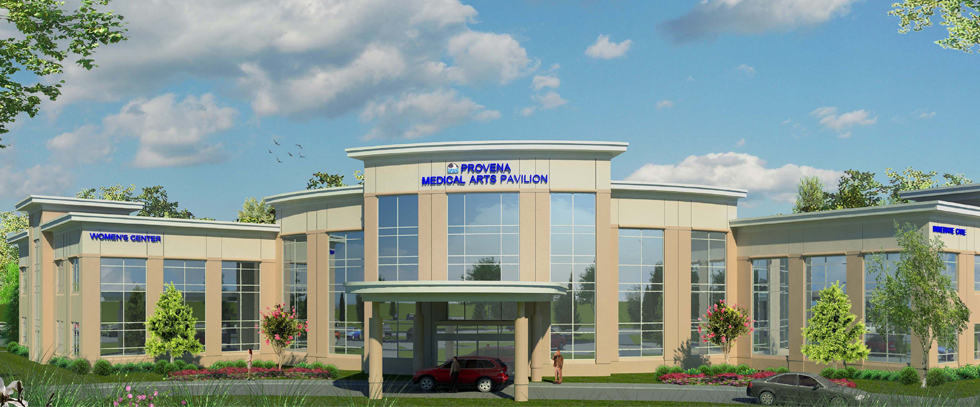
Rendina has been selected to develop several new projects throughout the country and sees no long term business impact from the recent economic downturn. “Our core business is strong as hospitals seek more ways to recruit doctors to their campuses and doctors respond to the opportunity of ownership,” says Varney. He adds that the company has successfully moved into working with both for-profit and non-profit hospital systems such as Provena Health, which operates in Illinois and Indiana and has recently selected Rendina to be a developer in its system. “We are happy to work with progressive healthcare providers such as this one,” he adds. The firm’s recent developments include:

[fancy_box]
[fancy_list style=”arrow_list”]

  • A three-story, 45,000 SF medical office building on the campus of the new replacement hospital for Southside Regional Medical Center in Petersburg, VA.
  • A 70,000 SF medical office building on the campus of the Bayonne Medical Center in Bayonne, New Jersey, which will include an ambulatory surgery center and adult daycare.
  • A 44,000 SF medical office building on the campus of the new replacement hospital for Glades General Hospital in Belle Glade, Florida
  • A 65,000 SF medical office building on the site of the replacement hospital for Mercy Medical Center, in Merced, CA. “Forty two percent of the building will be occupied by hospital services that need to be operating in order for the hospital to get its licensing. This is a trend that we are seeing with hospitals because it is less expensive than putting these services inside the hospital envelope,” says Hellickson.

[/fancy_list]
[/fancy_box]

Additionally, the firm has signed South University to a 40,000 SF lease to anchor the developer’s University Center in Royal Palm Beach, FL. The complex will consist of approximately 100,000 SF of office space in three buildings, all situated on a 10-acre site. “This facility will provide training for nurses and other medical professionals, and will be of great benefit to the community,” says Varney.

Eye On The Future

[pullquote1 quotes=”true” align=”left” textColor=”#012841″ cite=”Lawerence Juran, Co-Vice Chairman, Rendina”]I believe in our ability to offer great buildings and great solutions, and that’s what this market wants.[/pullquote1]With its management transition behind it, Rendina executives see a bright future ahead. “Our business historically has been focused on the Sunbelt but now we have expanded so much beyond that,” says Juran. “Our business had also historically been largely done with for-profit hospitals. As we looked towards the future we realized that we wanted to diversify geographically and work for not-for-profit hospitals such as Provena because they represent about 80 percent of all hospitals.”

While other aspects of the real estate business may be depressed, Varney says, healthcare continues to grow. “There are still many dated facilities that need to be replaced and hospitals in expansion mode, moving operations further away from their central campuses to be closer to the communities that they serve,” he says.

History has proven that Rendina’s model works for healthcare professionals and will continue to work over the long term. “I believe in our ability to offer great buildings and great solutions, and that’s what this market wants,” Juran says.

[button link=”https://rendina.com/wp-content/uploads/2013/07/Perspective-South-Florida-Winter-2009.pdf” size=”medium” variation=”deepblue” target=”blank”]Read Full Article[/button]


Wilson, Jan. “Rendina: The Leader in Medical Real Estate” Perspective South Florida. Winter 2009. Print.

‘I want to be successful in my own right.’

In the summer of 2001, Richard Rendina completed an internship at Lehman Brothers, a Wall Street investment bank. His mentor, Andrew Malik, showed him how to be a banking analyst but made sure he knew a few other things, too.

Don’t shuffle your feet when you walk or shake hands with gloves on. Never sit behind your desk when meeting with someone, and always try to return phone calls that same day.

”I found value in it,” Rendina said, laughing recently at the memory of Malik’s often-blunt suggestions. “He was never hesitant about teaching me life lessons.”

Rendina proved to be a quick study, later returning to South Florida to work at Rendina Cos., the real estate development firm founded by his father, Bruce, in 1998.

He spent 2 ½ years learning the family business, then — a month shy of his 27th birthday in December 2006 — ascended to CEO following Bruce’s death.

Not as gregarious as his father, Richard is nonetheless bright, personable, pensive and competitive, friends and colleagues say. He leans on a four-person advisory board but makes his own decisions. His leadership of the privately held company will be tested by a souring economy and a slipping commercial real estate market.

”I’m blown away by how well he’s done with all the pressures on him,” said Pat Conway, a longtime family friend who serves as a consultant to the company. “Talk about carrying a lot of weight at an early age.”

Rendina Cos. of Jupiter and La Jolla, Calif., builds all types of buildings but focuses on medical offices. It has completed 79 projects nationwide valued at more than $700 million and is working on 15 more developments worth in excess of $190 million.

Its signature South Florida developments include the commercial buildings at Abacoa in Jupiter and the expansion of Wellington Regional Medical Center in Wellington. The 51-person firm also is negotiating with North Broward Medical Center to develop a threestory building adjacent to the hospital in Deerfield Beach.

Before a recent senior staff meeting at the company’s plush Jupiter headquarters, Richard exchanged friendly banter, teasing one of the other executives who had been featured on local TV news the night before.

He then grew more serious, going around the room for updates on new business and asking if he could make any phone calls that might speed up talks with potential clients. Kevin DiLallo, chief executive of Wellington Regional, said Richard may be young, but he’s not at all overwhelmed.

”I don’t know that age is an issue,” DiLallo said. “He’s a smart guy, a good listener. He has a very good understanding of the business. He has all the attributes he needs to have.”

Richard, now 28, is the oldest of Bruce and Marji Rendina’s three sons. Michael, 25, is senior vice president of operations at Rendina Cos., and David, 20, is a junior at Florida State University.

When Richard turned 15, Bruce insisted that he get a summer job with a property management firm. The notso-glamorous gig had him pressure-cleaning buildings and removing spider webs
from light fixtures in the parking garages.

He graduated from Cardinal Newman High School in West Palm Beach and the University of Notre Dame, where he played intramural sports and majored in business management.

Bruce was a client of Lehman Brothers, and his contacts there helped Richard land the internship seven years ago. At first, Malik said, he and others in the office resented having to work with the son of a wealthy businessman.

”But Rich handled himself so elegantly that very quickly everyone had to look beyond that,” said Malik, now chairman of a privately held investment bank in New York. “He instantly won respect. Here was this kid of privilege, but he was willing to do the hard work and stay the hours.”

The impressive showing earned Richard a full-time job at Lehman after college. Richard figured he’d have years to serve as his father’s apprentice, but Bruce was diagnosed with a brain tumor in August 2005. Knowing he faced long odds, he told Richard and Michael he could sell the company or turn it over to them. They told him to keep it in the family.

Bruce died less than two weeks before Christmas 2006. He was 52.

For the first two months, Richard refused to take over Bruce’s office. But one of his then advisory board members, Larry Juran, pulled him aside and told him to move in, that there’s nothing worse than a perceived void at the top.

“The office sitting empty was a constant reminder of Bruce’s absence,” Juran said. “And by Rich not moving in, it kind of sent a message that he wasn’t fully taking over as chairman and CEO.”

Bruce was a master at landing new clients, who were drawn to an equity participation program that didn’t require them to invest any of their own cash. Richard has introduced other types of ownership structures, said Todd Varney, an executive vice president with the firm.

“He respects his dad’s traditions, but at the same time, he has put his own stamp on the company,” Varney said.

“It’s almost like we’re a start-up,” Michael Rendina said.

The company recently completed negotiations for a fourth office building at the Wellington hospital. Rendina also announced plans to build a 100,000-square-foot office development in Royal
Palm Beach. The anchor tenant, South University, is expected to move in late next year.

Richard Rendina said he is determined to build on his dad’s success, not be defined by it.

He will never forget how his father put together real estate deals, taught him how to run a business and at the same time coped with cancer treatments. Above all, his dad always impressed upon him to treat everyone, from waiters to fellow executives, with respect.

“We told my father we’d love nothing more than to carry on his legacy,” Richard said. “I was not interested in being a trust-fund baby, that’s for damn sure. I want to be successful in
my own right.”

by Paul Owers
Sun Sentinel

[button link=”https://rendina.com/wp-content/uploads/2008/08/I-Want-To-Be-Successful-In-My-Own-Right.pdf” size=”medium” variation=”deepblue” target=”blank”]Read Full Article[/button]


Owers, Paul. “I want to be successful in my own right.” Sun Sentinel. 24 August 2008. Print.

Building More Than Facilities

Although some of its competitors may view it as a simple task, the process of creating a healthcare facility is not as easy as it looks, Todd H. Varney says. “The reality is, there’s a lot more to it than building buildings and putting doctors in it,” he says. “You have to design the buildings to a different standard and form strong partnerships with the physicians and/or the hospital.”

Varney is the executive vice president of Rendina Cos. Inc., a Jupiter, Fla.-based firm that specializes in the design, development, financing and leasing of medical office real estate. Founder Bruce Rendina started the company 20 years ago, because he wanted to provide physicians with the opportunity to participate as both tenants and owners.

At the time, Rendina had many friends who were physicians, Varney says. “They had a need for medical space, [and] he came up with a unique offering where he could provide physicians with a Class-A office building, and allow them to participate in the ownership of the building without taking on the any of the development risks,” Varney explains.

The company that was born from friendships has grown into a national firm with a national headquarters in Jupiter and a western region headquarters in La Jolla, Calif., as well as regional offices throughout the country. Rendina Cos. also manages more than 5 million square feet of healthcare and other properties in the United States through its affiliate, Paramount Real Estate Services.

When developing projects, Rendina Cos. looks for ways to help its clients’ practices “from the beginning to the end,” Varney says. For instance, in a cardiologist’s office, the company will implement designs that differ than those for an orthopedic surgeon. Each specialty has a unique functionality. “We’re healthcare experts more than [we are] real estate developers,” he says.

Sadly, founder Bruce Rendina passed away last year, but his family continues to own and successfully run the company. His son, Richard M. Rendina, is chairman and CEO. In addition, “We have the same, experienced staff intact that was working under Bruce,” Varney says.

Delivering Greatness

Varney joined Rendina Cos. in April 1993, after graduating from the University of Miami with a degree in finance. He says that he has savored the company’s “close” culture, which its family ownership has nurtured.

“We’re all very close, both professionally and socially,” Varney says. “[Additionally,] I believe in our ability to deliver great buildings and great solutions.”

Rendina Cos. concentrates on forming close relationships with its clients. “As you develop with [health] systems and hospitals, you want to get repeat business and foster
long-term relationships,” he says.

Today, 90 percent of the company’s business is earned through word-of-mouth referrals, he adds. By staying focused, “The doctors and clients become the best salesforce for your company,” Varney says.

Rendina Cos. also distinguishes itself through the expertise of its management team, which holds extensive experience in healthcare facility marketing and physician recruitment. Varney notes that its senior executives average at least 11 years with the company and 18 years in the industry. “Our main focus has always been on medical real estate development,” he says. “This is our core business and we pride ourselves on being experts in the industry.”

Key People

Members of its leadership team include Executive Vice President Lawrence B. Juran, who has 25 years with Rendina Cos. Juran has been responsible for the development, construction and leasing of more than a million square feet of space at the company.

Varney also names Vice Chairman David Strachan, who has 30 years of industry experience. Previously, Strachan was the president and CEO of Universal Medical Buildings. He also served as the vice president and division partner of Koll Co. in Phoenix, where he was responsible for $70 million in construction volume annually.

“I consider him the most knowledgeable individual in the healthcare real estate industry nationally,” Varney raves. “[He] understands how to deliver a product to a client that will exceed their expectations.”

Flexible Work

A unique 2007 project for Rendina Cos. was Mat-Su Regional Medical Center, a 62,000-square-foot facility at Valley Hospital in Anchorage, Alaska. According to the company, Valley Hospital Association and Triad Hospitals had joined together to build a 152,000-square-foot hospital, but needed a third partner to help them recruit and retain area physicians.

The two went to Rendina Cos. to design a medical office building that would enhance their campus. Today, “The new facility features ancillary services that have improved the quality of care in the community, while also increasing service lines for the hospital, including an ambulatory surgery center and a cancer treatment center with a linear accelerator,” Rendina Cos. says.

Rendina Cos. developed the building under its Equity Participation Program and shared the majority of the ownership with the tenants. The facility was 100 percent leased prior to completion by some of the area’s leading physicians. Varney adds that the center also features orthopedics, cardiology and cancer treatment centers. “It just shows our flexibility,” he says, noting that the project required Rendina Cos. to adapt to a market with a unique climate. “[We were] able to develop a very successful solution.”

In addition to medical real estate development, Rendina Cos. has also developed more than 1.5 million square feet of mixed-use, professional and multi-unit residential space throughout the country.

Healthcare World Magazine
by Alan Dorich


Dorich, Alan. “Rendina Cos. Inc: Building More Than Facilities” Healthcare World Magazine. 23 January 2008. Print.