Rendina logo

Rendina Selected as Winner in 2016 HREI Insights Awards™

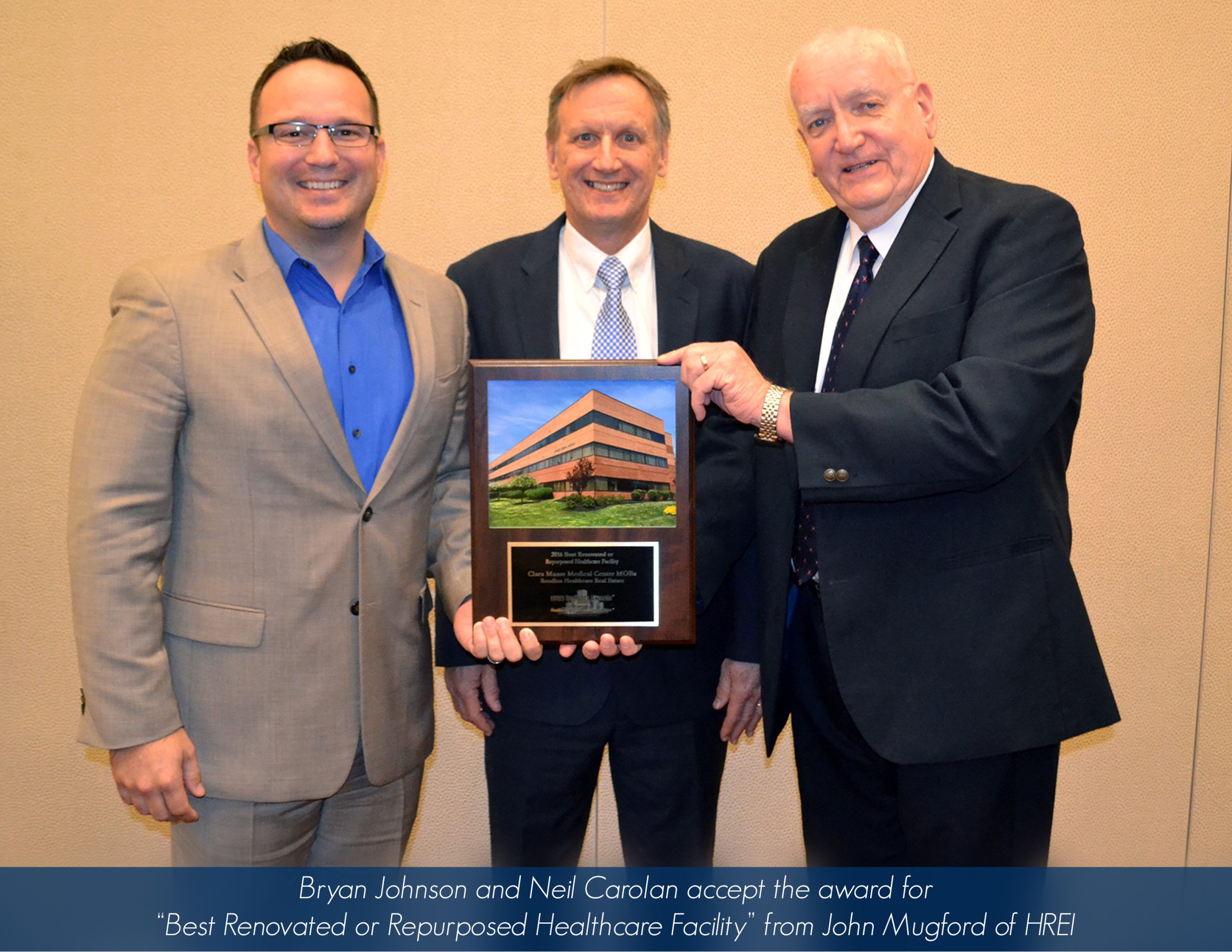
For the third consecutive year, Rendina Healthcare Real Estate has been honored in the Healthcare Real Estate Insights magazine (HREI) Insights Awards.

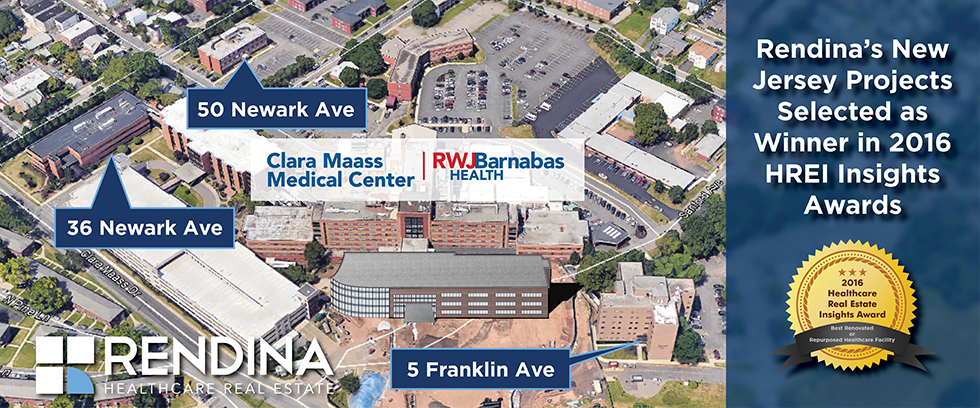
A group of three Rendina medical office buildings (MOBs) were selected as the winner of the “Best Renovated or Repurposed Healthcare Facility” award. Located on the campus of Clara Maass Medical Center (CMMC) in Clara Maass, New Jersey, the three MOBs total 128,006 square feet. CMMC, an RWJBarnabas Health campus, looked to Rendina for a solution that would free up capital for the hospital, enhance the campus and community, and improve overall patient and physician satisfaction.

After purchasing the MOBs from the hospital, Rendina transformed the dated facilities to modern healing environments by completely renovating all building common areas, including new lighting, flooring, paint and ceiling tiles, along with new suite doors and building entry systems. Other interior improvements consisted of new signage and directories to improve wayfinding, as well as artwork and furniture to further improve the patient experience. Rendina also enhanced building systems, including new HVAC, roof replacements, and elevator cab modernization and mechanical upgrades. Improved handicap access via new ramps and parking also increased accessibility for patients.

Since taking ownership of the MOBs, occupancy has increased nearly 10 percent and many physician groups have shifted from short-term commitments to long-term leases on the campus. This long-term loyalty to the campus is a benefit to the hospital, and the improved conditions on campus are the driving force behind these new physician commitments. Tenant ratings of “overall satisfaction” have increased 7 percent across the portfolio, according to a 2015 Kingsley Associates survey.

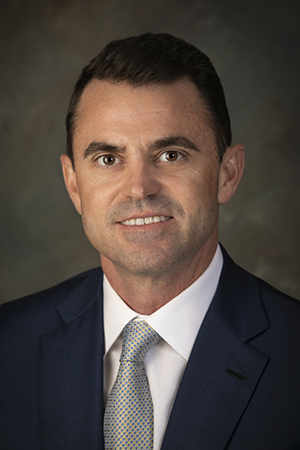
Richard Rendina, chairman and CEO of Rendina Healthcare Real Estate, is honored to receive another HREI award. “Our team at Rendina, in addition to RWJBarnabas and their physicians, are what made this possible,” said Rendina. “We are proud to provide the Clara Maass community with improved healing environments, and this collaborative effort being awarded by HREI is a testament to the hard work of everyone involved.”

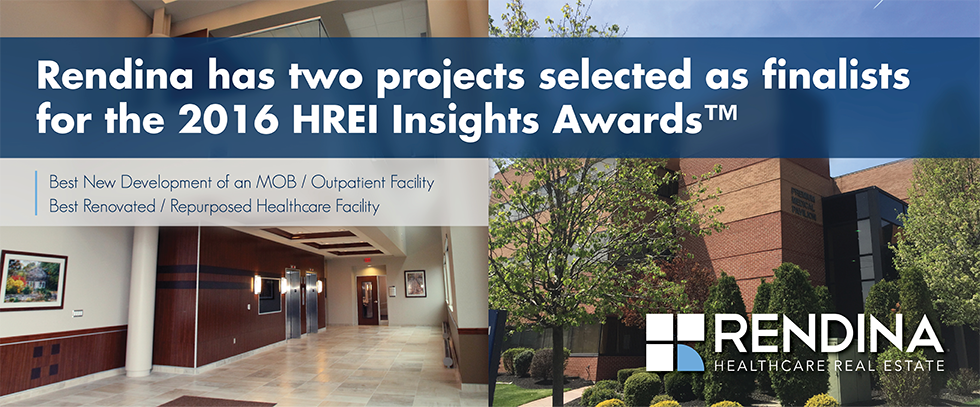
Rendina has two projects selected as finalists for the 2016 HREI Insights Awards™

Held annually, the Healthcare Real Estate Insights™ (HREI) Awards recognize fewer than 10 facilities throughout the country that exemplify excellence in the areas of healthcare real estate development. As HREI magazine prepares to announce winners of this year’s HREI Insights Awards™, Rendina Healthcare Real Estate is honored to receive two projects selected as finalists.

Rendina projects were named finalists in two categories: “Best New Development of an MOB or Outpatient Facility (between 25,000 and 49,999 square feet)” and “Best Renovated or Repurposed Healthcare Facility.”

The 2016 HREI Awards ceremony will be held on Dec. 8 at the RealShare Healthcare Real Estate Conference in Scottsdale, Ariz.


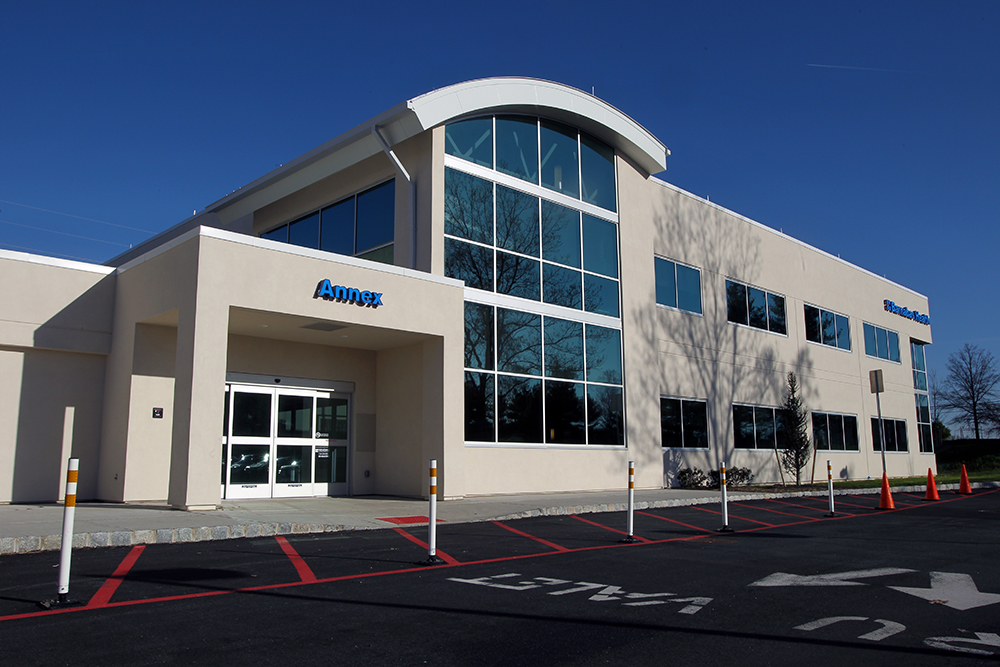
Barnabas Health Ambulatory Care Center Annex

Best New Medical Office Building & Other Outpatient Facility

Barnabas Health Ambulatory Care Center Annex

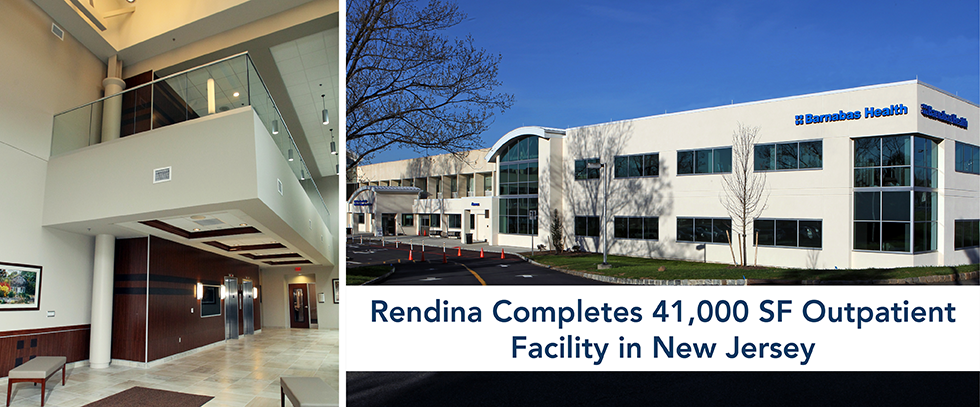
Selected as a contender for “Best New Development of an MOB or Outpatient Facility (between 25,000 and 49,999 square feet),” the 41,000 square foot Barnabas Health Ambulatory Care Center Annex was developed by Rendina as an addition to the existing Ambulatory Center in Livingston, N.J. The Annex is the first of many new construction projects in the relationship between Rendina and RWJBarnabas Health, New Jersey’s largest health system. Services from the existing ACC have been relocated to the new Annex and are paired with custom-designed physician space.

Prior to the completion of the new Annex, the existing ACC was already a hallmark of outpatient care in New Jersey, performing more ambulatory surgery procedures than any other center in the state. Services include a breast cancer center, rehabilitation, an osteoporosis and metabolic bone disease center, imaging center, sports medicine institute, and the region’s only medically-based integrative medicine center – providing acupuncture, mind/body medicine, herbology and therapeutic massage.


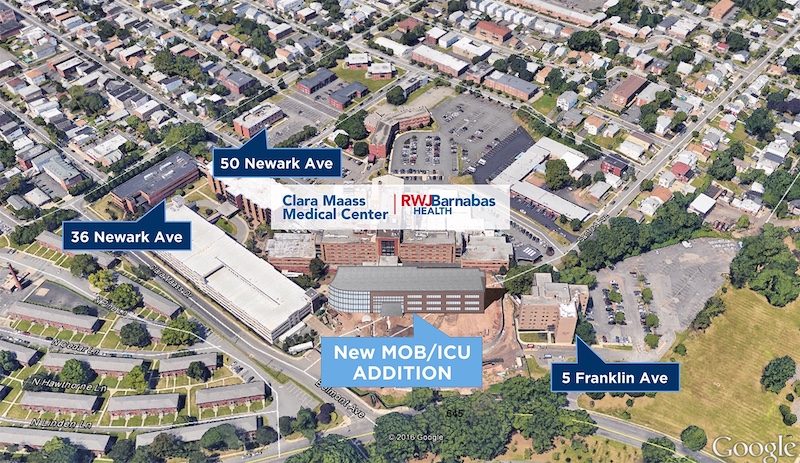
Clara Maass Medical Center Campus

Best Renovated or Repurposed Healthcare Facility

Being considered for “Best Renovated or Repurposed Healthcare Facility” are three MOBs on the campus of Clara Maass Medical Center (CMMC) in Belleville, N.J. The three MOBs, totaling 128,006 square feet, were acquired by Rendina and immediately underwent extensive renovations. CMMC, an RWJBarnabas Health campus, looked to Rendina for a solution that would free up capital for the hospital, enhance the campus and community, and improve overall patient and physician satisfaction.

After acquiring the three MOBs from the hospital, Rendina transformed the dated facilities to modern healing environments by completely renovating all building common areas, including new lighting, flooring, ceiling tiles, paint along with new suite doors and building entry systems. Other interior improvements consisted of new signage and directories to improve way-finding, as well as art work and furniture to further improve the patient experience. Building systems were also enhanced, including new HVAC, roof replacements, and elevator cab modernization and mechanical upgrades. Improved handicap access via new ramps and parking also increased accessibility for patients.

Rendina’s dedication to improving the campus has translated into measureable success. Since taking ownership of the MOBs, occupancy has increased nearly 10 percent. More importantly, many physician groups have shifted from short term commitments to long-term leases on the campus. This long-term loyalty to the campus is a true benefit to the hospital and the improved conditions on campus are the driving force behind these new physician commitments. ‘Overall Satisfaction’ has increased 7 percent across the portfolio, according to a 2015 Kingsley Survey.

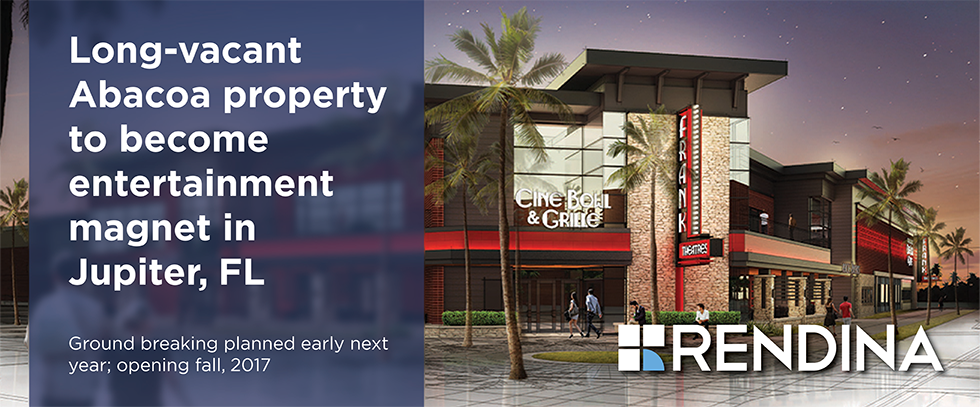
Rendina and Frank Entertainment Companies developing $21 million entertainment complex in Jupiter, FL

Rendina and Frank Entertainment Company have partnered in the development of a $21 million entertainment complex that will bring bowling, food, movies and music to downtown Abacoa.

Click Here for Full Article


By the numbers:

  • 2: Building stories
  • 2: Restaurants. Burger & Brew, rock and roll theme. Flair, tapas and cocktail.
  • 12: Movie screens
  • 20: Bowling lanes
  • 200: Employees expected to be hired
  • 299: IMAX Theater seats
  • 1,073: Total movie seats, all reclining
  • 10,367: Square feet of restaurant, including outdoor seating
  • 15,770: Square feet for bowling lanes
  • 48,000: Square feet of theater
  • 72,000: Square feet of entire project
  • $21 million: Projected project cost

Richard Rendina discusses population health management and its impact on healthcare real estate

Richard Rendina recently offered his expertise on the trend of population health management and its impact on healthcare real estate.

Click Here for Full Article

41,000 SF Outpatient Facility Opens in New Jersey

Rendina Healthcare Real Estate announces the completion and opening of a 41,000 square foot addition to the existing RWJBarnabas Health Ambulatory Care Center (ACC), in Livingston, an Essex County, N.J., community that is part of the New York Metropolitan Area.

Rendina will own and provide property management services to the new Annex. The project marks the first completed facility in a series of projects between the Florida-based developer and New Jersey’s largest health system, RWJBarnabas Health.

Services from the existing ACC have been relocated to the new Annex and are paired with custom-designed physician space.

The existing ACC is considered a hallmark of outpatient centers, providing a wide array of ambulatory surgery and diagnostic imaging procedures and also includes a healthcare concierge dedicated to patient satisfaction. Together with new facility addition, the ACC is one of the most sophisticated and full-service outpatient centers in New Jersey.

Rendina plans to celebrate another milestone later this year with the opening of the 87,000 square foot medical office building and ICU addition to Clara Maass Medical Center in Belleville, New Jersey.

Jupiter Courier Newsweekly Profile: Digging in on Abacoa

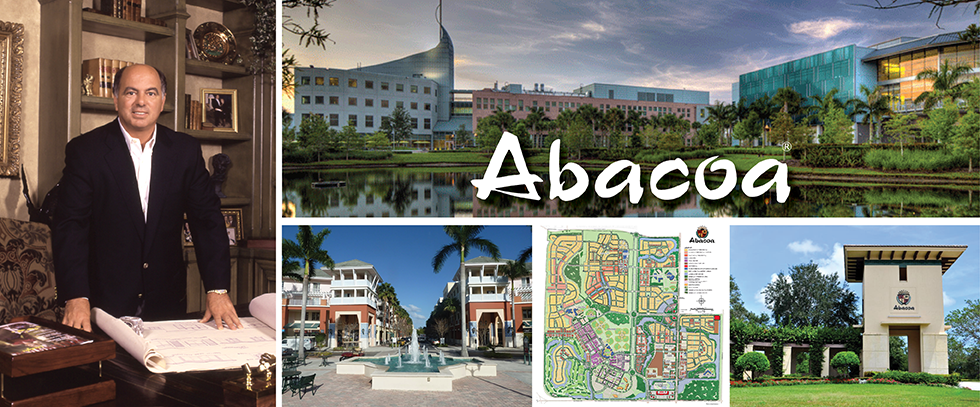
Looking back on the history of Abacoa – a vibrant community of single family homes, townhomes, live/work units, retail, business, professional and commercial space – there were many individuals who played an integral role in bringing the vision of Abacoa to life. The late Bruce Rendina was one of those visionaries, and today his influence lives on as Abacoa continues to thrive.


Download PDF Version


DIGGING IN

Abacoa’s Journey One for the Books

By Kit Bradshaw

JupiterCourierNewsweekly.com
TCPalm.com


It’s been nearly 20 years since the first shovel of dirt was dug on 2,055 acres of land adjacent to Donald Ross Road.

The community within a community called Abacoa is nearing build-out – as the last single family/ townhome neighborhood, Windsor Park At Abacoa, is nearly sold out.

ABACOA, A THRIVING COMMUNITY

Abacoa is a thriving community of single family homes, townhomes, live/work units, retail, business, professional and commercial space.

  • It boasts Roger Dean Stadium, the Florida home of two bioscience giants, Scripps Research Institute Florida and Max Planck Society, the MacArthur campus of Florida Atlantic University with its invigorating Lifelong Learning Center, Abacoa Golf Club, Marriott’s Courtyard Palm Beach Jupiter hotel, a 300-acre greenway, both middle and elementary schools, plus medical and professional buildings.
  • There are about 15,000 people who live in Abacoa, with about 5,700 homes upon completion and about 1.8 million square feet of commercial space when Abacoa is done. There are 14 purely residential neighborhoods, four mixed use neighborhoods in the community and a workplace district with five different neighborhoods as well.

Only about 50 acres, almost all earmarked for commercial development — one small parcel is slated for townhomes — remains of the vast piece of property that was once owned by insurance tycoon John D. MacArthur, who founded Palm Beach Gardens.

BIOSCIENCE HAS A HOME IN ABACOA

A key element is the presence of Scripps Florida and the Max Planck Society, which raised Abacoa and Jupiter from pleasant areas to live to desirable areas to live, work and play — the perfect combination for a community built on the principles of new urbanism.

Then Gov. Jeb Bush encouraged the bioscience behemoth, Scripps Research to come to Florida.

The Palm Beach County Commission designated an area west of West Palm Beach, known as the Mecca Farms and the adjoining Vavrus property as the area where Scripps would go. But environmental and infrastructure concerns as well as lobbying by Jupiter and other county areas prompted Scripps to reconsider where to locate.

Two possible locations were in the north and one in the south portion of the county, and eventually, county commissioners decided to have Scripps Florida headquartered in Abacoa, with additional acreage available just south of Donald Ross Road— the Briger property— for further expansion.

Two laboratory buildings created on the FAU campus in Abacoa temporarily housed the Scripps scientists until their building was completed in 2009. Soon afterward, another bioscience giant, Max Planck Society, located its Florida operation in Abacoa, using the now vacated buildings as temporary labs. These labs then reverted to FAU when Max Planck moved into its own building in Abacoa in 2012.

ABACOA STARTED WITH AN IDEA AND A PEN

How did all this start? With a sketch on a napkin.

“Dale Smith, who was director of Florida operations for the MacArthur Foundation, and I used to have a weekly breakfast together,” recalled George deGuardiola, the man who pioneered Abacoa.

“Dale was looking for land for FAU to expand north, since he was on the FAU task force, and I was on the task force to find a spring training facility for the Braves (at that time) and the Montreal Expos. During the breakfast, Dale said MacArthur wanted to be sure they located FAU in the right place, and I started to explain that it needed to be a community, where people could walk and bike without having to go on a collector road.

“I pulled out a napkin and drew it for him … this access is this way, and these housing types should be part of it, and there should be a central business district … it should be like a small town,” de Guardiola said. “Dale asked if I would make a presentation to the MacArthur board about this concept. Three weeks went by, and I went to Chicago to talk to the MacArthur board.

“The concept became a New Urban community by default, because having an easily accessible internal community is what New Urbanism is,” de Guardiola said.

ONE IDEA BUT MANY PEOPLE INVOLVED

There were several players in this scenario, including the MacArthur Foundation, which owned more than 40,000 acres throughout Florida, particularly along the eastern coastline.

MacArthur gave land to FAU to build its northern campus. Originally, FAU wanted 300 acres, but de Guardiola said that the university and the foundation, particularly the late Bob Friedman (a former FAU architect and later Jupiter Town councilor), negotiated the property to 137 acres.

‟Bob Friedman never got the credit he deserved for his role in bringing FAU to Abacoa,” de Guardiola said. Friedman had a significant role in creating the first two laboratory buildings at the FAU Abacoa campus that provided temporary workspace for Scripps and Max Planck.

BRUCE RENDINA/KAREN MARCUS

Nothing could be written about Abacoa without the influence of the late Bruce Rendina, who was a partner with de Guardiola in the commercial areas, and a key player in the development of Abacoa. Rendina’s son, Richard, now heads Rendina Healthcare Real Estate, a national name in the development of medical and healthcare offices.

To move the stadium project along, de Guardiola’s group gave 90 acres to the county, and in turn the county gave the developers $25 million to build the stadium. Ground was broken in 1997, and with an extreme effort, Roger Dean Stadium was ready for the 1998 spring training season.

One of the most important individuals in Abacoa’s infancy was then-Palm Beach County Commissioner Karen Marcus.

‟Without Karen Marcus, forget-about-it,” de Guardiola said.

‟A STRAWBERRY FARM”/ KAREN GOLONKA

‟The property was a strawberry farm,” Marcus said recently.

‟When George came to us and wanted to do the project, I told him they needed to annex this property to Jupiter and they agreed,” she said.

‟One of the challenges was the fact that the property was large,” said then-Mayor Karen Golonka, whom de Guardiola said saw the vision for Abacoa and was instrumental with shepherding the project through the Jupiter Town Council.

‟Initially the property wasn’t in the town, but they wanted to annex it to Jupiter to have the oversight of the town’s elected officials for this huge project. The first hurdle was did we want this size of property in Jupiter. Yes, we did,” Golonka said.

MARCUS WEIGHS IN

Marcus, according to de Guardiola, did two things that helped the fledgling community.

She put the expansion of the bridges across the Intracoastal Waterway on Donald Ross Road and on Indiantown Road on the county’s five-year plan, which would ease traffic into the community.

And she suggested that de Guardiola sit down with the environmental people who could have fought the project. As a result, everyone chose Pat Painter to do the environmental study.

‟Basically, we went back to the original Army Corps of Engineers’ photos of Abacoa before it was farmed and restored the naturalness to Abacoa, the natural flow of water. It was that simple,” de Guardiola said.

SOMEONE ON THE GROUND

Cypress Realty and the MacArthur Foundation needed someone on the ground to help take the napkin concept forward. That man was Nader Salour, the president of what was soon called the Abacoa Development Company. It was Salour and his team that created the infrastructure of Abacoa that would provide access to the new stadium, which he was also responsible for building.

Salour remembers the time crunch for the projects.

‟It was very difficult, to, in essence, build the infrastructure where there were farm fields, to connect Central Boulevard and Frederick Small, and Donald Ross, to build the stadium while FAU was under construction and to have 12 months to do it.

‟We had to do it all while still providing access for FAU’s contractors and subcontractors and getting the stadium completed,” Salour said. ‟When you have a huge undertaking, if you are a few weeks late, that’s considered acceptable. But with the spring training date for baseball, we couldn’t be one day late. We had to get it exactly right to finish the stadium, get it approved, inspected and turned over to the baseball teams on time.”

GOLONKA ON ‟NEW URBANISM”

The challenge for both the developers and for the Town of Jupiter was that the New Urbanism concept was not the norm for building in 1997 as it may be today. The overall concept is one of mixed use, a combination of commercial enterprises and residences.

‟With Abacoa, we were not only looking at residential and commercial, but workplace, and trying to come to agreement about what that entailed,” Golonka said.

‟For a long time, we weren’t sure what the workplace/industrial would look like or what we wanted it to look like. The idea of having townhouses and single family homes on the same block or across from each other with green space between them was different,” she said.

To have this move forward, de Guardiola and his team worked with the Jupiter Town Council and its staff to create a new zoning code that would encompass all the moving parts of this New Urbanism community within the Town of Jupiter.

‟It was a new concept for Florida, with the only other communities like this at Seaside (in the Panhandle) and Celebration (a Disney project near Orlando),” Golonka said.

• Buz DiVosta was the residential guru

The houses were a key element, and there was one name in Palm Beach County known for building exceptional houses. That name was Otto ‟Buz” DiVosta.

‟Without Buz’s commitment, Abacoa would be zero,” de Guardiola said. ‟There is no one like Buz in the world and I have tremendous respect for him.” Because the concept was so new, DiVosta built a street of homes in the first Abacoa neighborhood, New Haven, showing the homes, the alleys behind them, and the greenspace. ‟After DiVosta committed to Abacoa, he knocked the ball out of the park,” de Guardiola said.

Eventually, Bruce Rendina bought all the commercial locations; and DiVosta, which now is a building division of Pulte Homes, but still builds under the DiVosta name, purchased all the residential properties.

The problem for the town, however, was that although DiVosta was known for quality construction, the houses tended to look alike, so a ‟pattern book” of exteriors was created to bring variety into the neighborhoods as they were built.

‟The challenge residentially was to be mindful of maintaining the representations of the development that had been made, and make sure than the homes had a character and identity for all the neighborhoods, instead of homogenous architecture,” said John Sickler, director of planning and zoning for the Jupiter.

‟It was a big challenge, but everyone rose to the occasion and tried to make something that worked for everyone. There were a few neighborhoods not developed by DiVosta in Abacoa, but most of them were DiVosta neighborhoods.”

• Downtown Abacoa

The stadium, FAU and the residences were only part of the Abacoa equation.

Four years after Roger Dean Stadium was built, and the FAU buildings were going up, the Abacoa Downtown area was created.

Rendina and deGuardiola owned this property in the center of Abacoa, which featured a combination of restaurants and stores on the bottom floors and, at that time, rental units above.

OVER 150 ACRES

‟The commercial property was over 150 acres, which not only included the town’s business district but what was then the movie theater,” Richard Rendina said.

“That theater, owned by the Crown family, was later closed and torn down, and we bought the land back. We are now hoping to have a new concept there of a bowling alley and movie theater with the Frank family similar to what Bruce Frank has in Delray Beach at the CineBowl and Grill.

“Overall, there is a million square feet of commercial space in Abacoa, including medical office buildings that were developed either by my father or by me and my brothers,” Rendina said.

Through a winding set of circumstances, Rendina and de Guardiola sold their interest in Town Center to Lehman Brothers, but when Lehman Brothers had financial problems, Rendina bought them out, retaining the commercial areas of the town’s business district, but leaving the upstairs rental units to Lehman, who converted them to condos and sold them.

Woolbright bought the commercial enterprises next, but the bank took them over. Currently, the Simon family, FLF Holdings, owns what is Downtown Abacoa. FLF, according to the company’s information, is a real estate and management company that “targets quality income producing real estate assets that can benefit from our hands on management.”

“The town center of Abacoa is getting a second life, largely due to Josh Simon and a local company, FLF, which is based out of Jupiter,” said Jupiter’s Sickler. “While everyone likes to blame the location of Downtown Abacoa, it never had an owner who cared about success.”

Golonka is also optimistic about Downtown Abacoa. “The new owners of the town center are able to see on a regular basis what the issues are and I think that there is a much better chance it will succeed,” Golonka said.

THE FUTURE OF ABACOA?

With almost all of Abacoa completed, new ownership of Downtown Abacoa, bioscience firmly entrenched in the community, a long term spring training lease with the St. Louis Cardinals and the Florida Marlins, plus minor league play at Roger Dean Stadium – FAU flourishing and 15,000 people who are part of this New Urbanism concept – it looks as though Abacoa has moved from adolescence to adulthood.

“I sometimes come back to Abacoa,” said de Guardiola, who now lives in Miami.

“And I stand on the corner in the middle of the community and remember all the meetings about this project. I think of all the people who were important to the creation of Abacoa and I know that we gave birth to a sense of community that will enrich the entire area.”

As Salour said, “Abacoa is almost exactly what George de Guardiola originally pictured” … during that long-ago breakfast with a sketch on a napkin.

ABACOA’S BUILD OUT STATUS TO DATE:

  • Residential units built to date = 5,438. There remains up to 200 more residential units yet to be built.
  • Commercial square footage built to date and under construction presently = 1,341,000 square feet. There remains a 4000 seat movie theater and approximately 450,000 square feet of commercial yet to be built.

Source:
Donna Cesaro/Cypress Realty of Fla.

Special thanks to the Jupiter Courier Newsweekly, Treasure Coast Newspapers, TCPalm.com and the USA TODAY NETWORK for allowing us to share this article.


Top 5 Reasons For Hospitals to Sell their Real Estate Assets (INFOGRAPHIC)

Benefits of Asset Monetization

UNLOCK THE VALUE OF YOUR REAL ESTATE ASSET

As healthcare expenses continue to rise, many hospitals and health systems are looking for ways to generate additional capital. With the increased costs associated with physician alignment and IT, combined with declining reimbursements, health systems are recognizing a need to increase liquidity. Faced with many strategic capital priorities and limited resources, health systems must consider additional avenues to unlock value. Asset monetization can be a valuable solution in such an environment. By monetizing “non-core” real estate assets, such as medical office buildings (MOBs) and outpatient facilities, providers can realize numerous benefits.


Infographic


#1 – Provide Capital for Core Investments

The disposition of non-core healthcare real estate assets allows health systems and hospitals to focus financial and management resources on core, acute care business. Capital from monetization can then be infused in the implementation of key, mission-critical items including:

  • Construction/Renovation/Expansion of Core Real Estate Assets
  • IT Infrastructure and Medical Equipment
  • Mergers and Acquisitions

#2 – Increase Liquidity, Improve Credit Rating

As hospital margins continue to decrease, liquidity will be one of the primary drivers that rating agencies will analyze when underwriting overall health system credit. Capital received from monetization can improve liquidity and strengthen a hospital/health system’s balance sheet, which is particularly important to achieving an enhanced credit rating.


#3 –Bolster Strategic Initiatives

Low-risk capital from monetization can be used to grow a health system’s footprint and market share, as well as provide support for key strategic objectives, including physician recruitment, retention, and clinical expansion.


#4 – Legal & Regulatory Relief

Monetization often removes a hospital/health system from the landlord-tenant relationship, thereby limiting the exposure to complicated (and potentially costly) Stark and Anti-Kickback regulations.


#5 –Unlock Management Resources

Monetization frees up providers from the burdens associated with real estate management and landlord-tenant relationships. Monetization also allows a hospital/health system to reduce future capital liabilities through the transfer of facility operation costs (maintenance and management) to a third-party.


Rendina and Jupiter Medical Center Break Ground on the New Margaret W. Niedland Breast Center

Rendina Healthcare Real Estate announces that it has recently broken ground on a new project for Jupiter Medical Center in Jupiter. The Margaret W. Niedland Breast Center will be a LEED-Silver, two-story, freestanding facility.

The first floor of the state-of-the-art facility will house comprehensive women’s services including 3D mammography, breast ultrasound, Positron Emission Mammography (PEM), stereotactic breast biopsy, bone density, and breast and general MRI. The second floor will house the high-risk and genetics program and be available for physician office and educational space. The 26,000 square foot facility is slated to open in the first quarter of 2015.

Rendina was selected as project manager for the Margaret W. Niedland Breast Center. Anderson-Moore Construction, Davis Stokes Collaborative, Cotleur & Hearing and Jeff H. Iravani Inc. round out the experienced team engaged on this exciting new Jupiter Medical Center project.

The Margaret W. Niedland Breast Center is the first phase of Jupiter Medical Center’s oncology campus. The facility will be located on a 12-acre site owned by the hospital, two miles south of the main campus.


Rendina and Carolina Orthopaedic Specialists Break Ground on New Surgery Center

Rendina Healthcare Real Estate announces today the recent groundbreaking of a new project for Carolina Orthopaedic Specialists and the Coastal Surgery Center.

Family and friends of the area’s leading orthopaedic healthcare group were present at the ceremonial event, which took place on the 2-acre project site, approximately 15 miles south of Myrtle Beach.


Slated to open in March 2015, the 23,000 square foot facility will contain the Coastal Surgery Center on the ground floor and the Carolina Orthopaedic Specialists clinic on the second, alongside Proaxis Physical Therapy. The surgery center will be managed by Surgery & Recovery Partners, LLC based out of Greenville, SC.

The combination of all of these services under one roof provides a unique opportunity for unparalleled patient-focused orthopaedic services and first-class, same-day surgical care. The project aims to earn the business of its patients by providing convenience, high levels of customer service, excellent clinical outcomes and by helping to lower the costs of health care.

This new project also marks the second South Carolina development in as many years for Rendina.


Rendina Breaks Ground on the Provena Medical Arts Pavilion

Rendina, a leading healthcare real estate developer, broke ground last week on the construction of the Provena Medical Arts Pavilion, a 50,000 square-foot medical office building that will be located on the south side of Lincoln Highway (Route 30) and Roberts Road in New Lenox.

Scheduled for completion in the summer of 2012, the new facility will provide residents of Will County and beyond a variety of healthcare services, including an immediate care center, a diagnostic imaging center, and a unique one-stopshop women’s center. The future women’s center will offer the ultimate in women’s comprehensive care, and will be comprised of an all-female staff, including one of the only female urologists in the country. “This is a concept we like to call women caring for women,” said Jeffrey Brickman, President and Chief Executive Officer of
Provena Saint Joseph Medical Center.

Rendina is providing all development services for the project, including construction management, financing, leasing, and tenant improvement coordination. Davis Stokes Collaborative will provide architectural services, while S.M. Wilson will serve as the contractor.

“We are very excited to further our on-going relationship with Provena Health,” stated Richard M. Rendina, Chairman and Chief Executive Officer of Rendina. “As Will County continues to grow, the Provena Medical Arts Pavilion is a crucial step in ensuring that the healthcare needs of the community are met.”